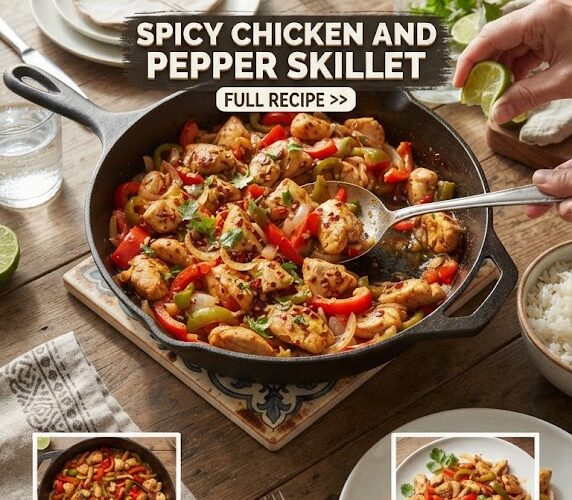
There is something inherently primal and satisfying about the sizzle of a hot skillet. When the aroma of searing protein meets the sweet, sharp scent of caramelized peppers and the pungent kick of chili, the kitchen transforms into a sanctuary of flavor. The Spicy Chicken and Pepper Skillet is more than just a meal; it is a masterclass in balance—balancing heat with sweetness, tenderness with crunch, and speed with culinary depth.
In the modern, fast-paced world, the “one-pan meal” has become the holy grail of home cooking. However, many one-pan recipes sacrifice complexity for convenience. This dish does not. By utilizing the high-heat conductivity of a skillet and a strategic layering of spices, you can create a restaurant-quality dinner that satisfies the boldest palates while requiring minimal cleanup. Whether you are a meal-prep enthusiast, a keto devotee, or simply someone who craves a dinner that “bites back,” this guide provides everything you need to master the Spicy Chicken and Pepper Skillet.
The Anatomy of a Perfect Skillet Meal
To understand why this dish works, we must look at its components. Every ingredient serves a purpose, contributing to the texture, aroma, or flavor profile.
The Protein: Choosing Your Chicken
The foundation of this dish is the chicken. While you can use various cuts, the choice between chicken breast and chicken thighs will fundamentally change the experience.
- Chicken Thighs (Boneless, Skinless): These are the preferred choice for many chefs. Thighs contain more fat, which translates to more flavor and a higher tolerance for heat. They remain juicy even if slightly overcooked, making them perfect for the high-intensity environment of a skillet.
- Chicken Breasts: If you are looking for a leaner, higher-protein option, breasts are the way to go. To prevent them from becoming dry or “rubbery,” they must be sliced thinly across the grain and cooked quickly over high heat.
- The Cut: For a skillet meal, uniformity is key. Slicing the chicken into 1-inch bite-sized cubes or thin strips ensures even cooking and allows every piece to be coated thoroughly in the spice blend.
The Pepper Medley: A Symphony of Colors and Heat
Peppers are not just a sidekick in this dish; they are a co-star. Using a variety of peppers provides a complex flavor profile that ranges from sugary-sweet to fiery.
- Bell Peppers: Use a mix of red, orange, and yellow. These provide the sweetness that balances the spice. Green bell peppers offer a more herbaceous, slightly bitter note that adds depth.
- Jalapeños: These are the standard for manageable heat. Removing the seeds and pith (the white ribs) allows you to enjoy the flavor of the pepper without the intense burn. Leaving them in turns up the volume.
- Serrano Peppers: For those who find jalapeños too mild, serranos offer a sharper, more immediate heat.
- Habaneros (Optional): Only for the brave. One finely minced habanero can infuse the entire skillet with a fruity, floral, and searing heat.
The Aromatic Base
Before the chicken and peppers take center stage, the foundation must be built.
- Red Onions: They caramelize beautifully and provide a visual pop of purple.
- Garlic: At least four to five cloves. Garlic should be added toward the end of the aromatic sauté to prevent it from burning and turning bitter.
- Fresh Ginger: Adding a teaspoon of grated ginger provides a “zing” that complements the spicy elements, common in Indo-Chinese or Thai-inspired versions of this dish.
The Science of Spice: Crafting the Heat
Spiciness should never be one-dimensional. A great Spicy Chicken and Pepper Skillet utilizes “layered heat.” This involves using different sources of spice that hit the palate at different times.
- The Immediate Kick: Ground cayenne pepper or fresh Thai bird’s eye chilies provide an instant heat that wakes up the tongue.
- The Slow Burn: Dried red chili flakes (crushed red pepper) release their oils slowly as they cook, building a warmth that lingers in the back of the throat.
- The Smoky Depth: Smoked paprika (Pimentón) or chipotle powder adds a layer of “charred” flavor, mimicking the taste of a grill even when cooking indoors.
- The Peppery Bite: Freshly cracked black pepper provides a different kind of heat—one that is more aromatic and pungent.
The Secret Ingredient: Acid
To make the spices truly “pop,” you need an acid. A squeeze of fresh lime juice, a splash of apple cider vinegar, or a dash of rice vinegar at the very end of cooking acts as a flavor brightener. It cuts through the fat of the chicken and the intensity of the peppers, creating a well-rounded bite.
Essential Tools for Skillet Cooking
While any frying pan can get the job done, certain tools will elevate your Spicy Chicken and Pepper Skillet from “good” to “extraordinary.”
1. The Cast Iron Skillet
The heavy-duty cast iron skillet is the gold standard. Its ability to retain heat means that when you drop cold chicken into the pan, the temperature doesn’t plummet. This results in a superior “sear”—that golden-brown crust known as the Maillard reaction.
2. Stainless Steel (Tri-Ply)
Stainless steel is excellent for developing “fond”—those little brown bits stuck to the bottom of the pan. When you deglaze the pan with liquid later, those bits dissolve into a rich, concentrated sauce that coats the chicken and peppers.
3. A High-Heat Spatula or Tongs
You need tools that can handle high temperatures without melting. Metal tongs are best for flipping individual pieces of chicken to ensure they are browned on all sides.
Step-by-Step Guide to the Perfect Spicy Chicken and Pepper Skillet
Phase 1: The Marinade (The Flavor Infusion)
Do not skip this step. Even 15 minutes of marinating can transform the chicken.
- Ingredients: Olive oil, lime juice, smoked paprika, cumin, garlic powder, onion powder, salt, and a pinch of sugar (the sugar helps with caramelization).
- Method: Toss the chicken cubes in the marinade and let them sit at room temperature while you prep the vegetables. This ensures the seasoning penetrates the meat rather than just sitting on the surface.
Phase 2: The Sear
Get your skillet screaming hot. Add a high-smoke-point oil (like avocado oil or grapeseed oil).
- Add the chicken in a single layer. Do not crowd the pan. If the pan is too full, the chicken will steam in its own juices rather than sear. Cook in batches if necessary.
- Let the chicken sit undisturbed for 2-3 minutes until a golden crust forms. Flip and cook for another 2 minutes. Remove the chicken from the pan and set it aside (it doesn’t need to be fully cooked through yet).
Phase 3: The Vegetables
In the same pan (don’t wash it!), add a little more oil if needed.
- Toss in the onions and sliced peppers. The moisture from the vegetables will begin to loosen the brown bits (fond) from the chicken.
- Sauté over medium-high heat. You want the peppers to be blistered and slightly softened but still retain a “snap.” This usually takes about 5-7 minutes.
- Add the garlic and fresh chilies in the last 60 seconds to avoid burning.
Phase 4: The Integration
Return the chicken and any accumulated juices back to the skillet.
- Add your “sauce” element. This could be a splash of soy sauce, a tablespoon of honey, or a bit of chicken stock.
- Toss everything together for 2 minutes until the chicken is cooked through and the sauce has thickened into a glossy coating.
Phase 5: The Finish
Turn off the heat. This is the time for “freshness.”
- Garnish with a handful of chopped cilantro or green onions.
- Add a final squeeze of lime.
- For extra texture, sprinkle with toasted sesame seeds or crushed peanuts.
Variations from Around the World
The beauty of the Spicy Chicken and Pepper Skillet is its versatility. By swapping a few spices and liquids, you can travel the world from your kitchen.
The Tex-Mex Skillet (Fajita Style)
- Spices: Cumin, chili powder, oregano.
- Peppers: Heavy on the bell peppers and jalapeños.
- Finish: Serve with warm flour tortillas, sour cream, and chunky guacamole.
The Sichuan “Kung Pao” Inspired Skillet
- Spices: Sichuan peppercorns (for that numbing sensation), dried red lanterns chilies.
- Liquids: Soy sauce, black vinegar, and a touch of hoisin.
- The Crunch: Add roasted peanuts or cashews at the very end.
The Mediterranean Spicy Skillet
- Spices: Dried oregano, red pepper flakes, and lemon zest.
- Additions: Cherry tomatoes and Kalamata olives.
- Finish: Sprinkle with crumbled feta cheese and fresh parsley.
The Caribbean Jerk Skillet
- Spices: Allspice, thyme, nutmeg, and Scotch Bonnet peppers.
- Sweetness: Add chunks of fresh pineapple to the skillet along with the peppers.
- Result: A complex “sweet-heat” that is incredibly addictive.
Dietary Adaptations
Low-Carb and Keto
This dish is naturally low-carb, but to keep it strictly keto, ensure you avoid honey or sugar in the marinade. Focus on high-quality fats like grass-fed butter or avocado oil. Serve over cauliflower rice or alongside roasted zucchini.
Paleo and Whole30
To make this Whole30 compliant, replace soy sauce with coconut aminos and ensure your spice blends have no added anti-caking agents or sugars. Use ghee as your cooking fat for a rich, buttery flavor without the dairy.
Vegetarian/Vegan Option
The method works perfectly for plant-based proteins. Swap the chicken for extra-firm tofu (pressed and cubed) or tempeh. For a whole-food approach, use thick slices of Portobello mushrooms, which provide a “meaty” texture that stands up well to the spicy peppers.
Perfect Pairings: What to Serve with Your Skillet
While the Spicy Chicken and Pepper Skillet is a complete meal on its own, adding a side can help stretch the dish or balance the heat.
- Grains: Fluffy white jasmine rice is the classic choice to soak up the juices. For a heartier option, try quinoa or a wild rice blend.
- Cooling Salads: A cucumber and radish salad with a light yogurt dressing provides a refreshing contrast to the spicy chicken.
- Bread: Garlic naan or crusty sourdough can be used to scoop up the peppers and onions.
- Beverages: A cold lager or a crisp Sauvignon Blanc works well. For non-alcoholic options, a sparkling limeade or an iced hibiscus tea helps neutralize the capsaicin on the tongue.
Meal Prep and Storage Tips
This is an elite meal prep dish because it tastes even better the next day as the flavors continue to meld.
- Storage: Store in airtight glass containers for up to 4 days in the refrigerator.
- Reheating: To avoid dry chicken, reheat in a skillet over medium heat with a tablespoon of water or chicken broth. If using a microwave, cover the dish with a damp paper towel to retain moisture.
- Freezing: You can freeze the cooked mixture, though the peppers will lose their “snap” and become much softer upon thawing. It’s best enjoyed fresh or from the fridge.
The Health Benefits of Spices and Peppers
This dish isn’t just tasty; it’s a nutritional powerhouse.
- Capsaicin: Found in spicy peppers, capsaicin has been shown to boost metabolism and promote heart health.
- Vitamin C: Bell peppers contain more Vitamin C than oranges. Cooking them quickly in a skillet helps retain much of this vital nutrient.
- Lean Protein: Chicken provides the essential amino acids needed for muscle repair and satiety.
- Antioxidants: Garlic and onions are rich in organosulfur compounds, which have anti-inflammatory and immune-boosting properties.
Troubleshooting Common Issues
“My chicken is tough and dry.”
- Solution: You likely overcooked it or used chicken breast without enough fat. Try using chicken thighs next time, or ensure you remove the chicken from the pan as soon as it’s browned, only returning it at the very end.
“The dish is too salty.”
- Solution: This often happens if you use a pre-made taco or fajita seasoning which is high in sodium. Make your own spice blend to control the salt. To fix a salty dish, add a squeeze of lemon or a bit of honey to balance the flavor.
“It’s not spicy enough!”
- Solution: The heat of peppers varies wildly. Always taste a small sliver of your pepper before cooking. If it’s mild, add a pinch of cayenne or a dash of hot sauce at the end.
“The peppers are soggy.”
- Solution: You likely overcrowded the pan or cooked them for too long. High heat and a short cooking time are essential for that “blistered yet crisp” texture.
Elevating the Presentation
We eat with our eyes first. To make this skillet look as good as it tastes:
- Contrast: Use a variety of pepper colors.
- Height: When plating, pile the chicken and peppers high in the center of the dish.
- Garnish: Never underestimate the power of fresh herbs. A sprinkle of bright green cilantro against the red and orange peppers makes the dish look professional.
- The Pan: If you used a beautiful cast iron skillet, serve it straight from the pan (on a heat-resistant trivet). It adds a rustic, homey feel to the dinner table.
Final Thoughts: The Joy of One-Pan Cooking
The Spicy Chicken and Pepper Skillet is a testament to the fact that simple ingredients, when treated with the right techniques, can create something extraordinary. It encourages experimentation—maybe today you add a dash of cinnamon for an earthy undertone, or tomorrow you swap the peppers for charred shishitos.
In a world of complicated recipes and expensive gadgets, the skillet remains the ultimate tool of the home cook. It is reliable, versatile, and capable of producing a meal that brings people together. So, heat up your pan, chop those peppers, and get ready for a dinner that is as vibrant and bold as you are.
Summary of Key Steps:
- Marinate for at least 15 minutes.
- Sear the chicken on high heat for a crust.
- Sauté the peppers and onions until blistered.
- Deglaze with a bit of liquid to capture all the flavor.
- Garnish with fresh herbs and acid for balance.
Keywords: Spicy chicken and pepper skillet, one-pan chicken dinner, healthy spicy recipes, easy chicken skillet, keto chicken recipe, meal prep chicken, bell pepper and chicken, cast iron chicken recipes, spicy stir fry, high protein dinner.
Description: Master the art of the Spicy Chicken and Pepper Skillet with this comprehensive guide. Learn about flavor layering, the best chicken cuts, and global variations for a perfect one-pan meal.