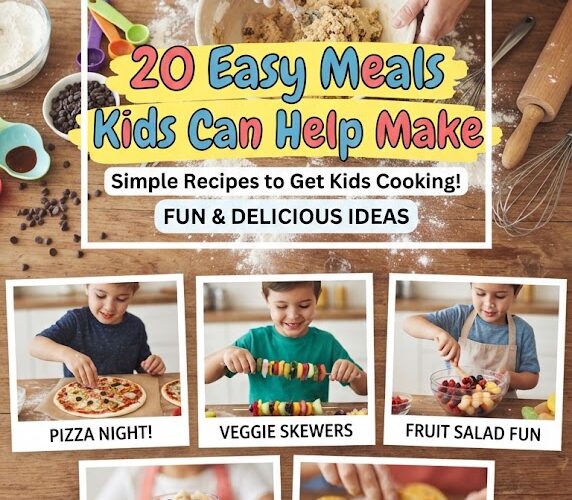
Getting kids involved in the kitchen can turn everyday meals into something much more exciting. Instead of seeing cooking as another chore, children can learn useful skills while helping create food the whole family can enjoy. From colorful breakfast bowls and homemade pizzas to tacos, sandwiches, pasta, and simple desserts, there are plenty of easy meals kids can help make without requiring complicated ingredients or advanced cooking techniques.
Cooking together can also be a practical way to introduce children to different foods. The USDA’s Nutrition.gov specifically encourages families to have fun cooking with children and provides kid-friendly recipes and food-safety resources.
The recipes below are designed with busy American families in mind. They use familiar grocery-store ingredients, flexible toppings, and simple preparation methods. Younger children can help wash produce, measure ingredients, stir mixtures, spread sauces, and assemble meals, while older children can take on more advanced tasks with appropriate adult supervision.
Important: Children should always have an adult nearby when using knives, ovens, stovetops, microwaves, or other potentially dangerous kitchen equipment. For meat, poultry, eggs, and other foods requiring cooking, an adult should verify that the food reaches a safe internal temperature. USDA guidance notes that appearance alone is not a reliable way to determine whether food is safely cooked; a food thermometer is the best way to check.
Why Kids Should Help Make Meals
Cooking with children is about much more than getting dinner on the table. It gives kids an opportunity to practice measuring, following directions, making choices, cleaning up, and trying new ingredients.
USDA’s Team Nutrition Cooks program is specifically designed around cooking activities for children ages 8 to 12 and notes that hands-on cooking can help children develop independence and become more interested in healthy food choices.
Cooking together can help children:
- Build confidence in the kitchen
- Practice reading and following instructions
- Learn basic measuring skills
- Become familiar with fruits and vegetables
- Develop food-preparation skills
- Make independent choices about toppings and ingredients
- Spend quality time with parents or caregivers
- Become more comfortable trying unfamiliar foods
- Understand where meals come from
- Learn basic kitchen organization and cleanup
The goal doesn’t have to be a perfect meal. The real win is giving children a chance to participate.
20 Easy Meals Kids Can Help Make
1. Build-Your-Own Mini Pizzas
Mini pizzas are one of the easiest meals for kids to assemble. Use English muffins, naan, pita bread, or small pizza crusts as the base.
Ingredients
- Mini naan, pita, or English muffins
- Pizza sauce
- Shredded mozzarella cheese
- Pepperoni
- Bell peppers
- Mushrooms
- Black olives
- Cooked chicken
- Italian seasoning
How to Make Them
Spread a thin layer of pizza sauce over each crust. Sprinkle on mozzarella and let children choose their favorite toppings. Finish with a small sprinkle of Italian seasoning.
An adult should handle the oven. Bake until the cheese melts and the crust becomes lightly crisp.
What Kids Can Do
Younger children can spread sauce with a spoon and sprinkle cheese. Older children can help prepare toppings and assemble the pizzas.
This meal is especially useful for picky eaters because children can customize their own pizza.
2. Chicken and Cheese Quesadillas
Quesadillas are quick, customizable, and perfect for busy weeknights.
Ingredients
- Flour tortillas
- Shredded cooked chicken
- Shredded cheddar or Mexican-blend cheese
- Black beans
- Corn
- Mild salsa
- Avocado
- Plain Greek yogurt or sour cream
How to Make Them
Place a tortilla on a work surface and add cheese, chicken, beans, and corn to one half. Fold the tortilla over.
An adult can cook the quesadilla in a skillet until the tortilla is golden and the cheese melts. Cut into wedges before serving.
What Kids Can Do
Kids can sprinkle the cheese, add chicken and vegetables, fold the tortilla, and create their own combinations.
For a family-style dinner, serve several toppings and allow everyone to customize their quesadilla.
3. Homemade Taco Bowls
Taco bowls are another excellent meal for children because they can assemble everything themselves.
Ingredients
- Cooked rice
- Cooked ground beef, chicken, turkey, or beans
- Shredded lettuce
- Corn
- Diced tomatoes
- Shredded cheese
- Avocado
- Mild salsa
- Plain Greek yogurt or sour cream
How to Make Them
Start with a bowl of cooked rice. Add your preferred protein, then layer on lettuce, corn, tomatoes, cheese, avocado, and salsa.
What Kids Can Do
Children can measure rice, add toppings, stir ingredients, and build their own bowls.
For younger kids, place ingredients in separate containers and let them choose what goes into their bowl.
This approach can make vegetables feel less intimidating because children have control over how much they want.
4. Peanut Butter Banana Toast
This simple meal works well for breakfast, an after-school snack, or a quick lunch.
Ingredients
- Whole-grain bread
- Peanut butter or another nut/seed butter
- Banana
- Cinnamon
- Optional berries
How to Make It
Toast the bread. Spread with peanut butter and top with banana slices. Add a light sprinkle of cinnamon.
What Kids Can Do
Kids can spread the nut or seed butter and arrange banana slices.
For children with food allergies, use an appropriate allergy-friendly spread.
This meal is especially convenient on busy school mornings when you want something simple but satisfying.
5. Easy Breakfast Yogurt Parfaits
A yogurt parfait requires no complicated cooking and gives children plenty of opportunities to make choices.
Ingredients
- Greek yogurt or regular yogurt
- Strawberries
- Blueberries
- Bananas
- Granola
- Oats
- Cinnamon
How to Make It
Layer yogurt, fruit, and granola in a glass or bowl. Repeat the layers until the container is full.
What Kids Can Do
This is one of the best meals for younger children. They can wash fruit, add yogurt, sprinkle granola, and create colorful layers.
You can also prepare a parfait station for a weekend breakfast where everyone creates their own combination.
6. Turkey and Cheese Roll-Ups
Turkey roll-ups are ideal for lunchboxes, quick lunches, and after-school meals.
Ingredients
- Whole-wheat tortillas
- Sliced turkey
- Cheese
- Lettuce
- Cucumber
- Shredded carrots
- Avocado
- Hummus
How to Make Them
Spread hummus or avocado over the tortilla. Add turkey, cheese, lettuce, cucumber, and carrots. Roll tightly and slice into pinwheels.
What Kids Can Do
Children can spread the hummus, layer ingredients, roll the tortilla, and choose their favorite vegetables.
For younger children, an adult should handle the slicing.
Serve with fruit or yogurt for a simple balanced meal.
7. Easy Pasta With Hidden Veggies
Pasta is a reliable family favorite, and you can easily add vegetables without making the meal complicated.
Ingredients
- Pasta
- Marinara sauce
- Shredded zucchini or finely chopped spinach
- Cooked ground turkey or chicken
- Parmesan cheese
- Italian seasoning
How to Make It
Cook the pasta according to package directions. Meanwhile, an adult can heat the sauce and protein and add the vegetables.
Combine the cooked pasta with the sauce and top with Parmesan.
What Kids Can Do
Children can measure pasta, add cheese, stir ingredients, and sprinkle seasonings.
For a fun variation, let children choose between different pasta shapes.
8. Breakfast Egg Muffins
Egg muffins are convenient for breakfast and can be prepared ahead of time.
Ingredients
- Eggs
- Shredded cheese
- Diced bell peppers
- Spinach
- Cooked turkey or chicken sausage
- Milk
- Salt and pepper
How to Make Them
An adult should crack and prepare the eggs if necessary. Whisk eggs with a small amount of milk, then add cheese and vegetables.
Pour the mixture into greased muffin cups and bake until the eggs are fully set.
What Kids Can Do
Kids can help measure ingredients, add vegetables, sprinkle cheese, and mix the egg mixture with supervision.
These mini egg cups can be refrigerated and reheated for quick breakfasts.
9. DIY Sandwich Bar
Turn an ordinary sandwich into a fun family activity by creating a sandwich station.
Ingredients
- Whole-grain bread
- Turkey
- Chicken
- Cheese
- Lettuce
- Tomato
- Cucumber
- Avocado
- Hummus
- Mustard
- Mayonnaise
How to Make It
Place the ingredients on a table and let everyone build a sandwich.
What Kids Can Do
Children can choose bread, spreads, proteins, cheese, and vegetables.
This is particularly helpful for picky eaters because children aren’t forced to eat ingredients they dislike.
Serve sandwiches with fresh fruit, sliced vegetables, or yogurt.
10. Easy Chicken and Rice Bowls
Chicken and rice bowls can be adapted to almost any family’s preferences.
Ingredients
- Cooked rice
- Cooked chicken
- Corn
- Peas
- Carrots
- Cucumber
- Shredded cheese
- Mild sauce or dressing
How to Make Them
Place warm rice in bowls and add chicken. Arrange vegetables around the rice and finish with cheese or a mild sauce.
What Kids Can Do
Children can assemble their bowls and select their toppings.
You can make the meal even more fun by serving ingredients separately and allowing children to create their own combinations.
11. English Muffin Breakfast Pizzas
Breakfast pizza is a fun alternative to cereal or toast.
Ingredients
- English muffins
- Eggs
- Shredded cheese
- Cooked turkey sausage
- Tomato
- Spinach
How to Make Them
Toast the English muffins. Add cooked scrambled egg, cheese, and toppings. An adult can return them to the oven briefly until the cheese melts.
What Kids Can Do
Kids can assemble the toppings and sprinkle cheese.
This recipe is especially good for weekends when children have more time to experiment with their breakfast.
12. Easy Bean and Cheese Tostadas
Beans provide an inexpensive base for a quick family meal.
Ingredients
- Baked tostada shells
- Refried beans
- Shredded cheese
- Lettuce
- Tomatoes
- Corn
- Avocado
- Mild salsa
How to Make Them
Spread warm refried beans over the tostada shell. Add cheese, lettuce, tomato, corn, avocado, and salsa.
What Kids Can Do
Kids can spread the beans and decorate their tostadas with toppings.
USDA’s healthy-kids resources highlight whole grains, vegetables, beans, and peas as foods children and adults can benefit from including more often.
13. Fruit and Chicken Wraps
Sweet and savory flavors can make a simple wrap more interesting.
Ingredients
- Whole-wheat tortillas
- Cooked chicken
- Lettuce
- Apple slices
- Shredded cheese
- Hummus
- Cucumber
How to Make Them
Spread hummus over the tortilla. Add chicken, lettuce, apple slices, cheese, and cucumber. Roll tightly and cut into smaller pieces.
What Kids Can Do
Children can arrange the ingredients and roll their own wraps.
Let them experiment with combinations such as chicken and apple or chicken and cucumber.
14. Easy Mac and Cheese With Broccoli
Mac and cheese becomes a more complete family meal when paired with a vegetable.
Ingredients
- Pasta
- Cheddar cheese
- Milk
- Butter
- Broccoli
- Optional cooked chicken
How to Make It
Prepare the pasta and cheese sauce according to your preferred recipe. Steam or cook broccoli until tender. Stir the broccoli into the pasta or serve it alongside the mac and cheese.
What Kids Can Do
Children can measure pasta and cheese, stir ingredients away from heat, and sprinkle cheese over the finished dish.
An adult should handle boiling water and hot cookware.
15. Easy Homemade Sloppy Joe Sliders
Small sandwiches are easier for children to hold and assemble.
Ingredients
- Small slider buns
- Ground beef or turkey
- Sloppy Joe sauce
- Cheese
- Lettuce
- Tomato
- Pickles
How to Make Them
An adult should cook the ground meat thoroughly and prepare the sauce. Spoon the mixture onto slider buns and add cheese or vegetables.
What Kids Can Do
Children can assemble the sliders and add their preferred toppings.
Food Network also recommends kid-friendly meals such as sloppy Joe sliders because children can participate in measuring ingredients and assembling the sandwiches with supervision.
16. No-Cook Chicken Salad Wraps
When you already have cooked chicken available, these wraps can come together quickly.
Ingredients
- Cooked shredded chicken
- Greek yogurt or mayonnaise
- Diced celery
- Diced apple
- Whole-wheat tortillas
- Lettuce
- Optional dried cranberries
How to Make Them
Mix chicken with yogurt or mayonnaise, celery, and apple. Spread the mixture over tortillas and add lettuce. Roll and slice.
What Kids Can Do
Kids can measure ingredients, stir the chicken mixture, and assemble the wraps.
This is a great option for using leftover chicken from another dinner.
17. Veggie and Cheese Pita Pockets
Pita pockets make vegetables more exciting because children can stuff their own meal.
Ingredients
- Whole-wheat pita
- Hummus
- Cucumber
- Tomato
- Lettuce
- Shredded carrots
- Cheese
- Cooked chicken or beans
How to Make Them
Open the pita and spread hummus inside. Add vegetables, cheese, and your choice of protein.
What Kids Can Do
Children can fill the pita and choose their favorite ingredients.
For younger children, cut the vegetables into safe, age-appropriate pieces and supervise closely.
18. Easy Homemade Nacho Plates
Nachos can become a fun family meal when you build them with nutritious toppings.
Ingredients
- Tortilla chips
- Black beans
- Shredded cheese
- Corn
- Tomatoes
- Avocado
- Cooked chicken
- Mild salsa
- Greek yogurt
How to Make Them
Arrange tortilla chips on a baking sheet. Add beans, chicken, and cheese. An adult should bake them until the cheese melts.
Finish with fresh vegetables, avocado, salsa, and yogurt.
What Kids Can Do
Kids can sprinkle toppings over the chips before baking and add fresh toppings afterward.
Create individual sections so each child can customize their portion.
19. Banana Oatmeal Breakfast Bowls
Warm oatmeal is inexpensive, filling, and easy to customize.
Ingredients
- Rolled oats
- Milk or water
- Banana
- Berries
- Peanut butter or seed butter
- Cinnamon
- Chopped nuts for older children, if appropriate
How to Make It
An adult can prepare the oatmeal on the stovetop or microwave according to package directions. Pour into bowls and allow it to cool to a safe eating temperature.
Add banana, berries, cinnamon, and peanut or seed butter.
What Kids Can Do
Children can choose toppings and decorate their bowls.
Overnight oats are another option when you want a no-cook breakfast that children can assemble ahead of time.
20. Simple Homemade Chicken Pizza Wraps
These wraps combine familiar pizza flavors with an easy-to-hold tortilla.
Ingredients
- Flour tortillas
- Pizza sauce
- Cooked chicken
- Mozzarella cheese
- Bell peppers
- Spinach
- Italian seasoning
How to Make Them
Spread pizza sauce over a tortilla. Add cooked chicken, cheese, and vegetables. Fold or roll the tortilla.
An adult can warm the wrap in a skillet or oven until the cheese melts.
What Kids Can Do
Kids can spread sauce, sprinkle cheese, and add toppings.
Older children can help fold the wraps while an adult handles the hot cooking surface.
How to Choose the Right Kitchen Tasks for Kids
Not every child needs to perform the same task. The best kitchen job depends on the child’s age, maturity, experience, and ability to follow instructions.
Younger Children
Younger kids can often help with:
- Washing fruits and vegetables
- Pouring pre-measured ingredients
- Stirring cold mixtures
- Sprinkling cheese
- Adding toppings
- Mixing ingredients
- Arranging food
- Setting the table
Elementary-Age Children
With supervision, school-age children can gradually help with:
- Measuring ingredients
- Cracking eggs
- Mixing batter
- Using child-safe kitchen tools
- Assembling sandwiches and wraps
- Preparing simple salads
- Following recipe steps
- Helping with cleanup
Older Children
Older kids who have demonstrated appropriate kitchen skills may gradually learn to:
- Use a knife safely
- Operate the microwave
- Use the stovetop with supervision
- Prepare simple recipes independently
- Use a food thermometer
- Read nutrition labels
- Plan meals
- Clean cooking equipment
USDA’s Team Nutrition resources provide cooking activities specifically for different childhood age groups, including resources for kindergarteners and children ages 8 to 12.
Kitchen Safety Tips for Cooking With Kids
Safety should always come before speed.
Before beginning a recipe, wash hands and clean the preparation area. Keep raw meat and poultry separate from foods that will be eaten without cooking.
Teach children that knives, hot pans, ovens, stovetops, boiling water, and electrical appliances require adult supervision appropriate to their age and skill level.
When cooking meat, poultry, eggs, or other foods where safe doneness matters, use a food thermometer rather than relying only on color or appearance. USDA Food Safety and Inspection Service guidance explains that visual appearance isn’t a reliable measure of whether food has reached a safe temperature.
It’s also important to refrigerate perishable foods promptly. USDA guidance recommends discarding perishable foods that have been left out for more than two hours, or one hour when the temperature is above 90°F.
How to Make Kids More Interested in Cooking
You don’t need to turn every meal into a complicated cooking lesson. Small responsibilities can make children feel involved.
Try these simple strategies:
Let Kids Choose
Give children two or three options rather than asking an open-ended question.
For example:
“Do you want strawberries or blueberries?”
“Would you like chicken or beans in your taco bowl?”
“Do you want cheddar or mozzarella?”
Choices can make children feel like they have ownership of the meal.
Create a Topping Station
Taco bowls, pizzas, oatmeal, yogurt parfaits, tostadas, and sandwiches all work well as build-your-own meals.
Place ingredients in separate bowls and let children assemble their plates.
Give Each Child a Job
One child can wash vegetables while another measures ingredients. Someone else can set the table.
This keeps everyone involved without crowding the kitchen.
Don’t Focus on Perfection
If the sandwich isn’t perfectly shaped or the toppings aren’t evenly distributed, that’s okay.
The purpose is to learn.
Let Children Taste New Ingredients
Encourage curiosity rather than forcing children to eat something they don’t like. A small taste can be enough to start building familiarity with a new ingredient.
Easy Meals for Busy Weeknights
When schedules are packed with school, homework, sports, and activities, elaborate recipes aren’t always practical.
That’s why meals such as quesadillas, taco bowls, mini pizzas, wraps, sandwiches, and pasta are so useful. They can be customized, use common ingredients, and allow children to participate without turning dinner into a major project.
Meal prepping can make these recipes even easier. Prepare rice, cooked chicken, chopped vegetables, or washed fruit ahead of time and store them properly. Then children can help assemble meals during the week.
Current family-meal guidance and recipe collections also emphasize simple preparation and make-ahead options as useful strategies for busy households.
A Simple Weekly Kids’ Cooking Plan
You can turn these 20 recipes into a four-week cooking challenge.
Week 1: Breakfast
- Banana oatmeal bowls
- Yogurt parfaits
- Peanut butter banana toast
- Egg muffins
- Breakfast pizzas
Week 2: Lunch
- Turkey roll-ups
- Chicken salad wraps
- Pita pockets
- DIY sandwiches
- Chicken and fruit wraps
Week 3: Dinner
- Mini pizzas
- Chicken quesadillas
- Taco bowls
- Pasta with vegetables
- Chicken and rice bowls
Week 4: Family Favorites
- Bean tostadas
- Sloppy Joe sliders
- Homemade nachos
- Mac and cheese with broccoli
- Chicken pizza wraps
This gives children opportunities to practice different skills instead of making the same meal repeatedly.
Frequently Asked Questions
What are the easiest meals for kids to help make?
Some of the easiest options include mini pizzas, yogurt parfaits, quesadillas, sandwiches, taco bowls, wraps, oatmeal bowls, and tostadas. These meals involve simple assembly and allow children to choose their own toppings.
What can a 5-year-old help make?
A 5-year-old can often help wash produce, stir ingredients, sprinkle cheese, pour pre-measured ingredients, spread soft foods, and assemble simple meals with close adult supervision.
What meals can kids make without cooking?
Good no-cook choices include yogurt parfaits, sandwiches, turkey roll-ups, chicken wraps using already-cooked chicken, overnight oats, fruit bowls, and pita pockets.
How can I get picky eaters involved in cooking?
Give picky eaters choices. Let them select toppings, assemble their own pizza, build a taco bowl, or choose fruits and vegetables for a parfait. Participation can make mealtime feel less stressful and more enjoyable.
Are these meals healthy for kids?
Many of these meals can be part of a balanced diet when you combine appropriate portions of protein, whole grains, fruits, vegetables, and dairy or alternatives. The USDA’s Recipes for Healthy Kids cookbook emphasizes whole grains, vegetables, beans, peas, and other nutrient-rich foods.
Should kids use the oven or stove?
Only when their age, maturity, and experience make it appropriate, and with supervision. Younger children should generally stick to preparation and assembly tasks while an adult handles hot equipment.
Final Thoughts
These 20 easy meals kids can help make are more than simple recipes. They are opportunities for children to learn, explore, make decisions, and spend meaningful time with their families.
Start with meals that require simple assembly, such as yogurt parfaits, sandwiches, quesadillas, mini pizzas, and taco bowls. As children become more comfortable in the kitchen, gradually introduce measuring, mixing, chopping, and supervised cooking tasks.
The best family meals don’t have to be complicated. A few familiar ingredients, a little creativity, and a child who gets to participate can turn an ordinary dinner into a memorable experience.
Cooking together also creates skills that can last well beyond childhood. Children can learn how to follow directions, measure ingredients, prepare food safely, clean up after themselves, and eventually plan and cook meals independently.
So choose one recipe this week, invite your kids into the kitchen, and let them take the lead on the parts they can safely handle. The finished meal doesn’t need to look perfect. What matters is that your family made it together.