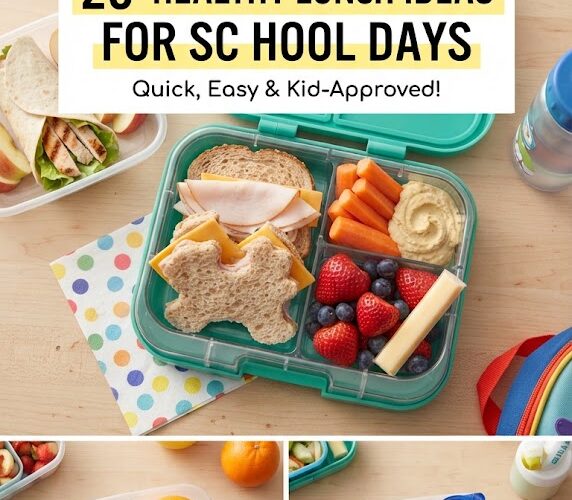
Packing a healthy school lunch does not have to mean making complicated recipes every morning. The best school lunches are often simple, colorful, filling, and easy for kids to eat. A balanced lunch can combine whole grains, protein, fruits, vegetables, and dairy or fortified alternatives while keeping added sugar, saturated fat, and sodium in check. The USDA MyPlate approach encourages families to offer a variety of foods from these major food groups.
For busy parents, the biggest challenge is finding healthy lunch ideas for school that children will actually enjoy. Kids may love one food today and refuse it tomorrow, so having a collection of easy lunch options can make school mornings much less stressful.
Whether you are looking for healthy kids lunch ideas, easy school lunch ideas, packed lunch ideas, or nutritious lunch recipes for picky eaters, this guide has plenty of inspiration. These 25 ideas are designed to be practical for American families and flexible enough to adjust for different ages, preferences, budgets, and dietary needs.
Note: Children’s nutritional needs vary by age, growth, activity level, and individual circumstances. These ideas are general food inspiration rather than individualized medical or dietary advice.
Why a Healthy School Lunch Matters
Lunch is an important opportunity to give children nutritious foods during the school day. The American Academy of Pediatrics notes that school meals and snacks can provide a significant portion of children’s daily nutrition and encourages meals that include fruits, vegetables, whole grains, lean proteins, and appropriate dairy or alternatives.
A good lunch can also help children stay satisfied until the end of the school day. Instead of focusing on making every lunch perfect, aim for variety over time.
For example, one lunch might contain:
- Whole-grain bread
- Grilled chicken
- Sliced cucumber
- Strawberries
- Yogurt
- Water
Another day could include:
- Brown rice
- Black beans
- Corn
- Avocado
- Orange slices
- Cheese
The goal is not to force children to eat every food group at every meal. Rather, parents can consistently offer nutritious choices and allow children to develop preferences naturally.
USDA guidance recommends offering a variety of fruits, vegetables, grains, protein foods, and dairy or fortified soy alternatives, while choosing foods lower in added sugars, saturated fat, and sodium.
25 Healthy Lunch Ideas for School
1. Turkey and Cheese Whole-Grain Roll-Ups
Turkey and cheese roll-ups are one of the easiest healthy school lunch ideas for busy mornings.
Use whole-grain tortillas and fill them with sliced turkey, cheese, lettuce, and thinly sliced cucumber. Roll everything tightly and cut the tortilla into small pinwheels.
Add:
- Apple slices
- Baby carrots
- Greek yogurt
- Water
For extra flavor, add a thin layer of hummus or avocado spread.
This lunch is easy to customize. If your child does not like lettuce, leave it out. If turkey is not a favorite, try chicken instead.
2. Chicken and Veggie Wrap
A chicken wrap can turn leftover dinner chicken into a completely different school lunch.
Start with a whole-wheat tortilla and add cooked chicken, shredded lettuce, cucumber, shredded carrots, and a small amount of cheese. A simple yogurt-based dressing can add flavor without making the wrap too heavy.
Pair it with grapes and a small container of yogurt.
This is especially useful for meal prep because cooked chicken can be prepared ahead of time and used in several lunches throughout the week.
3. Mini Hummus Snack Box
For kids who enjoy grazing rather than eating one large sandwich, a lunchbox-style meal can be a great option.
Create sections with:
- Hummus
- Whole-grain crackers
- Cucumber slices
- Carrot sticks
- Bell pepper strips
- Grapes
- Cheese cubes
This lunch provides several textures and flavors while giving children choices.
Offering fruits and vegetables in convenient, ready-to-eat forms can make them easier for children to choose. The American Academy of Pediatrics recommends keeping washed and cut fruits and vegetables readily available.
4. Peanut Butter and Banana Sandwich
A peanut butter and banana sandwich can be a quick, inexpensive school lunch.
Spread peanut butter on whole-grain bread and add banana slices. For extra fiber and flavor, sprinkle a small amount of cinnamon on top.
Serve with:
- Strawberries
- Cucumber slices
- Plain or lightly sweetened yogurt
- Water
Important: Always follow your school’s allergy policy. If peanuts or tree nuts are restricted, replace peanut butter with a school-approved alternative such as sunflower seed butter.
5. Chicken Pasta Salad
Cold pasta salad can be an excellent lunchbox option.
Combine cooked whole-wheat pasta with grilled chicken, cherry tomatoes, cucumber, and shredded carrots. Add a small amount of olive-oil-based dressing.
You can prepare several portions in advance and store them safely in the refrigerator.
For variety, replace chicken with chickpeas, beans, cheese, or another protein your child enjoys.
6. Turkey Avocado Sandwich
A classic sandwich can become a nutritious school lunch with a few simple choices.
Use whole-grain bread, turkey, avocado, lettuce, and tomato. Keep wet ingredients separate if your child dislikes soggy bread.
Serve the sandwich with:
- Blueberries
- Baby carrots
- Cheese
- Water
Avocado provides a creamy texture that can make sandwiches more appealing without needing a heavy sauce.
7. DIY Taco Lunchbox
Give kids the ingredients and let them assemble their own tacos at lunchtime.
Pack:
- Small whole-grain tortillas
- Cooked chicken or beans
- Shredded lettuce
- Corn
- Diced tomatoes
- Shredded cheese
- Mild salsa
Add an orange or apple on the side.
DIY meals can be especially useful for picky eaters because children have some control over which ingredients they combine.
8. Greek Yogurt and Fruit Lunch Box
A yogurt-based lunch can be a refreshing alternative to sandwiches.
Pack plain or lightly sweetened Greek yogurt with:
- Berries
- Banana slices
- Whole-grain granola
- Cucumber slices
- Whole-grain crackers
- Cheese
Choose yogurt with less added sugar when possible.
USDA guidance recommends choosing foods that are nutrient-dense and limiting added sugars.
9. Mini Chicken Quesadillas
Cut whole-grain tortillas into smaller portions and fill them with cooked chicken and shredded cheese.
Cook until the cheese melts, then cut into triangles.
Serve with:
- Mild salsa
- Avocado
- Apple slices
- Carrot sticks
For a vegetarian version, use black beans instead of chicken.
10. Egg and Cheese Breakfast-for-Lunch Box
Eggs are not just for breakfast.
Make a simple egg-and-cheese sandwich using a whole-grain English muffin. Add fresh fruit and vegetables on the side.
Another option is to pack a hard-boiled egg with whole-grain crackers, cheese, grapes, and cucumber.
Eggs provide protein and can be prepared ahead of time, making them convenient for busy school mornings.
11. Tuna and Cucumber Sandwich
For children who enjoy seafood, tuna can make a satisfying sandwich filling.
Mix tuna with a small amount of plain Greek yogurt or mayonnaise and add finely chopped cucumber. Place it on whole-grain bread.
Serve with:
- Apple slices
- Carrots
- Grapes
- Water
Always consider school rules regarding seafood and allergies.
12. Healthy Homemade Pizza Lunch
Pizza can absolutely fit into a balanced lunch when prepared thoughtfully.
Use a whole-grain pita as the base. Add tomato sauce, mozzarella cheese, and vegetables such as bell peppers or mushrooms. Bake until the cheese melts.
Cut the pita pizza into small slices and pack with fruit and water.
This can be especially appealing to children who regularly reject traditional sandwiches.
13. Turkey Meatball Lunchbox
Homemade turkey meatballs can be prepared ahead of time and served cold or warm, depending on your lunch-storage setup.
Pack a few turkey meatballs with:
- Whole-grain crackers
- Cucumber
- Cherry tomatoes
- Strawberries
- Cheese
For younger children, foods should be prepared in developmentally appropriate sizes and textures to reduce choking risks.
14. Bean and Cheese Burrito
A simple bean-and-cheese burrito is affordable, filling, and easy to customize.
Spread cooked beans over a whole-grain tortilla and add shredded cheese. Roll and cut into smaller pieces.
Add:
- Corn
- Salsa
- Orange slices
- Cucumber
- Yogurt
Black beans, pinto beans, or mashed white beans can all work.
Beans are also a useful plant-based protein option and fit naturally into a varied eating pattern.
15. Apple and Chicken Salad Wrap
For a sweet-and-savory lunch, combine chopped cooked chicken with diced apple and a small amount of plain Greek yogurt.
Place the mixture inside a whole-grain tortilla with lettuce.
Serve with:
- Blueberries
- Carrot sticks
- Cheese
- Water
The natural sweetness of apple can make this wrap attractive to children who enjoy sweeter flavors.
16. Veggie Pasta with Parmesan
Vegetable pasta is another easy way to create a satisfying lunch.
Cook whole-grain pasta and mix it with cooked broccoli, peas, carrots, or bell peppers. Add a small amount of Parmesan cheese and olive oil.
Pack fruit on the side.
If your child is hesitant about vegetables, start with one familiar vegetable and gradually introduce others. The AAP recommends repeatedly offering fruits and vegetables rather than assuming that a child will accept a food immediately.
17. Chicken and Rice Bowl
A small rice bowl can be a welcome change from sandwiches.
Combine:
- Brown or whole-grain rice
- Cooked chicken
- Corn
- Cucumber
- Shredded carrots
- Avocado
A small container of mild dressing or sauce can be added separately.
This lunch can also be made from leftovers, reducing food waste and saving preparation time.
18. Cheese and Turkey Snack Box
Snack boxes are ideal for children who prefer several small portions.
Try:
- Turkey slices
- Cheese cubes
- Whole-grain crackers
- Strawberries
- Cucumber
- Baby carrots
You can change one or two ingredients every week to keep the lunch interesting.
This approach also makes grocery shopping easier because the same basic ingredients can be used in multiple combinations.
19. Chickpea Salad Wrap
For a vegetarian school lunch, mash chickpeas with a little plain Greek yogurt, avocado, or another preferred dressing.
Add cucumber and shredded carrots, then place everything inside a whole-grain wrap.
Serve with berries and yogurt.
Chickpeas provide plant-based protein and can be a useful alternative to meat-based sandwich fillings.
20. Homemade Chicken Nuggets with Fruit and Veggies
Many kids love chicken nuggets, so making a homemade version can be a practical lunch option.
Use pieces of chicken coated with whole-grain breadcrumbs and bake them until fully cooked.
Pack them with:
- Apple slices
- Cucumber
- Carrots
- Whole-grain crackers
- Yogurt-based dip
For food safety, use an insulated lunch bag and appropriate ice packs for foods that need refrigeration.
21. Turkey and Avocado Pinwheels
Pinwheels are fun, portable, and visually appealing.
Spread mashed avocado onto a whole-grain tortilla, add turkey and cheese, roll tightly, and slice into rounds.
Pair with:
- Strawberries
- Bell peppers
- Whole-grain crackers
- Yogurt
These can be prepared the night before, making them especially convenient for busy school mornings.
22. Mediterranean-Inspired Lunch Box
A Mediterranean-style lunch box can offer plenty of variety.
Pack:
- Hummus
- Whole-grain pita
- Cucumber
- Tomatoes
- Cheese
- Olives, if appropriate for your child
- Grapes
You can also add chicken or chickpeas for additional protein.
The variety of colors and textures can make this lunch more interesting than a standard sandwich.
23. Sweet Potato and Black Bean Bowl
Cooked sweet potato pairs well with black beans.
Create a simple bowl with:
- Roasted sweet potato
- Black beans
- Corn
- Avocado
- Brown rice
Add a small amount of mild salsa if your child enjoys it.
This is an excellent meat-free lunch that can be prepared in batches.
24. Whole-Grain Bagel Sandwich
Use half of a whole-grain bagel to create a compact school sandwich.
Fill it with:
- Turkey
- Cheese
- Lettuce
- Tomato
Serve with blueberries, cucumber slices, and yogurt.
For younger children, choose portions appropriate for their appetite rather than assuming that every child needs the same amount.
25. Rainbow Fruit and Chicken Lunch Box
Make lunch visually exciting with colorful foods.
Pack:
- Grilled chicken strips
- Whole-grain crackers
- Strawberries
- Blueberries
- Orange slices
- Cucumber
- Carrots
- Cheese
A colorful lunch can encourage children to explore different foods. However, there is no need to pressure a child to finish everything. Offering healthy options repeatedly can help children become familiar with new foods.
How to Build a Balanced School Lunch
You do not need to calculate calories or nutrients for every lunch. Instead, think about creating variety.
A simple formula is:
Protein + Whole Grain + Fruit or Vegetable + Dairy/Alternative + Water
For example:
Chicken + whole-grain wrap + strawberries + yogurt + water
Or:
Black beans + brown rice + avocado and corn + cheese + water
USDA MyPlate emphasizes variety across fruits, vegetables, grains, protein foods, and dairy or fortified soy alternatives.
Whole grains can also help provide fiber and nutrients. USDA school-lunch guidance highlights whole grains as a source of B vitamins, minerals, and fiber.
Healthy School Lunch Ideas for Picky Eaters
Picky eating can make lunch preparation frustrating. Instead of preparing an entirely separate meal every day, try offering one familiar food alongside one less familiar food.
For example:
- Crackers + cucumber
- Chicken + strawberries
- Cheese + carrots
- Pasta + broccoli
- Peanut-free sunflower butter sandwich + banana
This gives children something they recognize while allowing them to gradually explore new foods.
Avoid turning lunch into a battle. Children may need multiple exposures before accepting a new food. The AAP recommends continuing to offer fruits and vegetables and allowing children opportunities to become familiar with them.
Let Kids Help Choose Their Lunch
Children can participate in age-appropriate lunch preparation.
They might:
- Pick the fruit
- Wash vegetables
- Put crackers into a container
- Assemble a wrap
- Choose between two sandwich fillings
- Add ingredients to a lunchbox
USDA specifically recommends involving children in tasks such as assembling salads, measuring, scooping, and choosing foods.
Giving children choices can make lunch preparation more enjoyable and may increase their interest in trying different foods.
Easy School Lunch Meal Prep
Meal prepping does not need to take an entire Sunday.
Start by preparing a few basic ingredients:
- Cook chicken or another protein.
- Wash fruits and vegetables.
- Prepare rice or pasta.
- Portion crackers and snacks.
- Boil eggs if your family uses them.
- Store ingredients in separate containers.
Then mix and match throughout the week.
For example:
Monday: Chicken wrap + strawberries + cucumber
Tuesday: Chicken pasta salad + blueberries + yogurt
Wednesday: Chicken quesadilla + apple + carrots
Thursday: Chicken and rice bowl + grapes + cucumber
Friday: Chicken snack box + crackers + fruit + cheese
The same ingredients can create completely different lunches.
How to Keep Lunches Interesting
Children can quickly become bored when they receive the exact same lunch every day. You can create variety without buying completely different groceries.
Change the format:
- Sandwich
- Wrap
- Roll-up
- Pasta salad
- Rice bowl
- Snack box
- Quesadilla
- Pita pizza
Then rotate flavors and sides.
For example, turkey can become a sandwich one day, a wrap the next, and a snack-box protein later in the week.
Healthy Lunchbox Swaps
Small swaps can improve the overall nutritional quality of a lunch without making it feel restrictive.
Try:
White bread → whole-grain bread
Sugary yogurt → plain or lower-added-sugar yogurt
Chips every day → whole-grain crackers or vegetables
Sugary drink → water
Candy → fruit
Processed meat every day → chicken, beans, eggs, tuna, or other protein choices
USDA guidance encourages choosing foods with less added sugar, saturated fat, and sodium.
This does not mean children can never enjoy treats. Healthy eating is about the overall pattern rather than making every meal perfect.
Healthy Drinks for School Lunch
Water is one of the simplest choices for school.
Depending on the child’s age and dietary needs, milk or an appropriate fortified alternative may also fit into a balanced eating pattern. USDA guidance includes dairy or fortified soy alternatives as part of the overall food-group pattern.
Try not to make sugary drinks a routine part of lunch.
If your child prefers flavored drinks, gradually transitioning toward water or lower-sugar options may be easier than making a sudden change.
Food Safety Tips for Packed School Lunches
Healthy food also needs to be stored safely.
Foods such as meat, poultry, eggs, dairy products, and certain prepared foods can require refrigeration. Use an insulated lunch bag and appropriate cold packs when needed.
Keep hot foods hot and cold foods cold using equipment designed for safe food transport.
Also remember:
- Wash hands before preparing food.
- Wash fruits and vegetables before packing.
- Use clean lunch containers.
- Follow package storage instructions.
- Check school allergy policies.
- Consider your child’s age when cutting foods.
For younger children, pay particular attention to choking hazards and prepare foods in safe sizes and textures.
How to Make Healthy School Lunches More Affordable
Healthy lunches do not need to be expensive.
Buy versatile ingredients that can be used in several meals.
Good budget-friendly options include:
- Oats
- Brown rice
- Whole-grain pasta
- Beans
- Eggs
- Bananas
- Apples
- Carrots
- Cucumbers
- Seasonal fruit
- Yogurt
- Whole-grain bread
Buying larger packages of staple foods can sometimes lower the cost per serving, while seasonal produce can offer affordable variety.
Leftovers can also become tomorrow’s lunch. Roast chicken can become a wrap, pasta salad, quesadilla filling, or rice bowl.
A Simple 5-Day School Lunch Plan
If you want an easy weekly rotation, try this:
Monday
Turkey and cheese whole-grain roll-ups, cucumber, strawberries, yogurt, and water.
Tuesday
Chicken pasta salad, carrots, blueberries, cheese, and water.
Wednesday
Black bean and cheese burrito, corn, apple slices, and yogurt.
Thursday
Chicken quesadillas, avocado, cucumber, grapes, and water.
Friday
Hummus snack box with whole-grain crackers, vegetables, cheese, and fruit.
This type of rotation keeps preparation simple while providing variety.
Frequently Asked Questions
What is a healthy lunch for a school child?
A healthy school lunch can include a protein food, whole grain, fruit or vegetable, and dairy or fortified alternative, along with water. The exact portions depend on the child’s age, appetite, activity level, and individual nutritional needs.
What are some easy healthy lunch ideas for kids?
Some easy choices include turkey roll-ups, chicken wraps, hummus snack boxes, peanut butter and banana sandwiches, chicken pasta salad, quesadillas, bean burritos, yogurt and fruit boxes, and turkey sandwiches.
What can I pack instead of a sandwich?
Try a pasta salad, rice bowl, quesadilla, snack box, chicken strips, taco box, pita pizza, or hummus and vegetable lunch box.
How can I make healthy lunches more appealing to picky eaters?
Offer familiar foods alongside new foods, vary colors and textures, and let children participate in choosing or assembling lunch. Avoid turning unfamiliar foods into a forced eating experience.
Are school lunches supposed to include fruit and vegetables?
USDA school meal guidance includes fruits and vegetables as components of school lunches.
What should kids drink with lunch?
Water is a simple everyday option. Depending on age and individual dietary needs, milk or fortified alternatives can also contribute nutrients to a child’s eating pattern.
Final Thoughts
Finding healthy lunch ideas for school days becomes much easier when you stop trying to create a brand-new recipe every morning. Build a small collection of dependable ingredients and rotate them into different meals.
Turkey roll-ups, chicken wraps, hummus boxes, bean burritos, pasta salads, quesadillas, rice bowls, and fruit-and-protein snack boxes can all become part of a flexible lunch routine.
The most important goal is variety. Offer fruits, vegetables, whole grains, protein foods, and dairy or fortified alternatives throughout the day, while choosing foods with less added sugar, saturated fat, and sodium.
Most importantly, remember that children have different appetites and preferences. A lunchbox does not need to be perfect to be nutritious. Small improvements made consistently can create a healthier and more enjoyable school lunch routine.