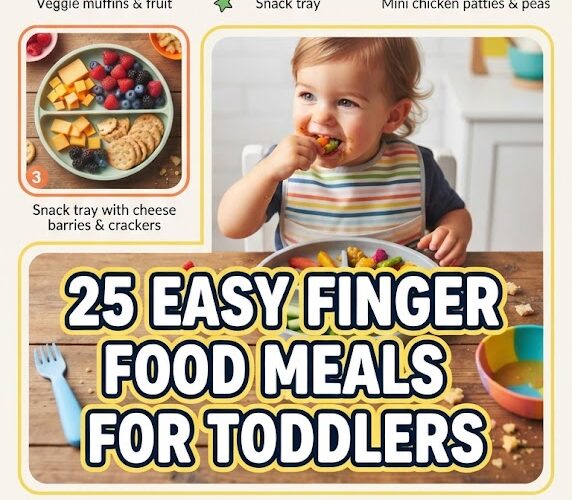
Feeding a toddler can feel like a full-time job. One day your little one loves bananas, and the next day the same banana gets pushed across the table. That is why having a collection of easy finger food meals for toddlers can make breakfast, lunch, dinner, and snack time much less stressful.
Finger foods give toddlers an opportunity to practice picking up food, exploring different textures, and becoming more independent at mealtimes. The best toddler finger foods are soft enough to manage, easy for little hands to pick up, and made with simple ingredients that fit into a balanced meal.
This collection of 25 easy finger food meals for toddlers includes quick breakfast ideas, simple lunches, toddler dinners, nutritious snacks, and make-ahead options. You will find everything from mini pancakes and egg muffins to chicken bites, sweet potato wedges, avocado toast, quesadilla strips, and soft veggie fritters.
For toddlers, texture and preparation matter just as much as the ingredients. USDA guidance recommends modifying foods into developmentally appropriate sizes, shapes, and textures to reduce choking risk. Young children should eat while seated and supervised, and foods such as whole grapes, popcorn, nuts, hard candies, raw carrots, and chunks of nut butter can present choking hazards.
Important safety note: These recipes are general meal ideas, not medical or individualized nutrition advice. Always consider your child’s age, chewing and swallowing skills, allergies, and developmental readiness. Prepare foods in an age-appropriate texture and size, and supervise your toddler while eating.
Why Finger Foods Are Great for Toddlers
Finger foods can turn mealtime into a hands-on learning experience. Instead of relying entirely on a spoon or fork, toddlers can use their hands to pick up small pieces and practice feeding themselves.
The CDC recommends encouraging toddlers to explore foods with their fingers and eventually transition to child-sized utensils. It also notes that mealtimes can be an opportunity for children to learn about different tastes and textures.
Finger foods can also make meals easier for busy parents. You can prepare several ingredients ahead of time and combine them in different ways throughout the week.
For example, roasted sweet potato pieces can be served with eggs for breakfast, chicken for lunch, or beans and avocado for dinner. Cooked vegetables can be mixed into egg muffins, fritters, quesadillas, or pasta.
The goal isn’t to make every meal perfect. Instead, aim to offer a variety of foods over time.
25 Easy Finger Food Meals for Toddlers
1. Banana Oat Mini Pancakes
Banana oat mini pancakes are one of the easiest toddler breakfast ideas because they require only a few basic ingredients.
Ingredients
- 1 ripe banana
- 1 egg
- ½ cup quick oats
- A pinch of cinnamon
- A small amount of oil for the pan
Instructions
Mash the banana in a bowl. Add the egg, oats, and cinnamon and mix until combined.
Heat a lightly greased skillet over medium-low heat. Spoon small portions of batter into the pan and cook until the edges look set. Flip carefully and cook the other side.
Allow the pancakes to cool before serving. Cut them into toddler-friendly pieces if necessary.
Serve with soft berries, banana pieces, or plain yogurt.
Toddler tip: Make a large batch and refrigerate or freeze extras for quick breakfasts.
2. Egg and Cheese Muffins
Mini egg muffins are a convenient way to create a protein-rich finger food that can be prepared ahead of time.
Ingredients
- Eggs
- Shredded cheese
- Finely chopped cooked vegetables
- Optional cooked chicken or turkey
Whisk the eggs and mix in the cheese and vegetables. Pour the mixture into small greased muffin cups and bake until completely set.
Allow them to cool before serving.
You can customize these muffins with spinach, zucchini, broccoli, sweet potato, or finely chopped bell pepper.
Because toddlers have different chewing abilities, make sure vegetables are cooked until soft and cut appropriately.
3. Sweet Potato Wedges
Sweet potatoes are naturally soft and slightly sweet, making them a popular toddler-friendly vegetable.
Wash and peel a sweet potato if desired. Cut it into thick, manageable wedges. Toss lightly with olive oil and roast until completely tender.
Allow the wedges to cool before serving.
For a complete toddler meal, pair sweet potato wedges with shredded chicken, soft avocado, and steamed broccoli.
Avoid making the outside overly crisp or hard for a young toddler.
4. Avocado Toast Strips
Avocado toast is a quick breakfast or lunch idea that takes only a few minutes.
Spread mashed ripe avocado thinly over soft toast. Cut the toast into strips or small pieces appropriate for your child’s developmental abilities.
You can add a thin layer of scrambled egg or soft shredded chicken for additional variety.
Choose bread with a soft texture and avoid large, tough crusts if your toddler has difficulty chewing them.
5. Chicken and Vegetable Meatballs
Homemade chicken meatballs can be made soft and tender by combining ground chicken with finely grated vegetables.
Ingredients
- Ground chicken
- Finely grated zucchini
- Finely grated carrot
- Egg
- Oats or breadcrumbs
- Mild herbs
Mix everything together and form small meatballs. Bake until thoroughly cooked.
Let them cool, then break them into appropriately sized pieces for your toddler.
Serve with soft pasta, cooked vegetables, or mashed sweet potato.
USDA guidance recommends removing bones from meat and poultry and modifying foods into small, manageable pieces for young children.
6. Soft Quesadilla Strips
A simple cheese quesadilla can become an easy toddler lunch.
Place shredded cheese between two soft tortillas and cook until the cheese melts and the tortilla becomes lightly browned.
Allow it to cool before cutting into strips.
For extra nutrition, add mashed black beans, finely chopped cooked vegetables, or shredded chicken.
Keep fillings soft and avoid large chunks.
Serve with mashed avocado or plain yogurt for dipping.
7. Scrambled Egg and Avocado Bites
Soft scrambled eggs are easy to combine with creamy avocado.
Cook the egg until fully set but still soft. Chop it into small pieces and mix with ripe avocado.
For a more complete meal, serve with soft toast strips and cooked fruit or vegetables.
This combination works well for breakfast, lunch, or a quick dinner when you don’t have much time to cook.
8. Banana and Yogurt Bites
For a simple snack or breakfast, combine banana slices with plain yogurt.
Use ripe banana because it is softer and easier to mash.
You can also spread a thin layer of yogurt onto soft toast and top it with mashed banana.
For children over 12 months, plain yogurt can be part of a varied toddler diet. CDC guidance encourages fruits, vegetables, whole grains, meat or meat alternatives, and dairy foods for children older than 12 months.
9. Mini Turkey and Cheese Sandwiches
Small sandwiches can be a convenient toddler lunch.
Use soft bread with thin layers of cheese and finely chopped or shredded cooked turkey.
Cut the sandwich into small strips or manageable pieces.
Pair it with soft cucumber that has been appropriately prepared, avocado, or cooked vegetables.
Avoid large pieces of meat or cheese that may be difficult for a toddler to chew.
10. Broccoli Cheese Bites
Broccoli becomes more appealing when combined with cheese and baked into soft little bites.
Steam broccoli until very tender. Chop it finely and combine with egg, shredded cheese, and oats or breadcrumbs.
Form small portions and bake until cooked through.
These bites are easy to hold and can be served alongside fruit, avocado, or yogurt.
11. Mini Pasta Cups
Cook small pasta until soft. Mix with a mild tomato sauce and shredded cheese.
Spoon the mixture into mini muffin cups and bake until set.
Once cooled, the pasta cups can be offered as easy finger food.
For variety, mix in finely chopped cooked vegetables such as zucchini, spinach, or carrots.
Make sure the pasta is soft enough for your child’s chewing ability.
12. Apple and Cinnamon Oat Bites
Soft baked oat bites are a great make-ahead breakfast or snack.
Combine finely grated apple, oats, egg, and a little cinnamon. Spoon into small muffin cups and bake until cooked.
Let them cool completely before serving.
The apple should be finely grated or cooked soft rather than offered as a hard raw chunk.
Serve with plain yogurt for dipping.
13. Soft Chicken and Rice Balls
Cooked rice and finely shredded chicken can be combined into soft little bites.
Mix cooked rice with shredded chicken and a small amount of mashed vegetables. Form the mixture into soft portions and warm gently.
Serve alongside avocado or steamed vegetables.
Avoid adding lots of salt. CDC guidance recommends avoiding foods high in salt and added sugars for young children.
14. Zucchini Fritters
Zucchini fritters are an easy way to introduce vegetables in a familiar finger-food format.
Grate zucchini and squeeze out excess moisture. Mix with egg, shredded cheese, and oats or breadcrumbs.
Cook small fritters in a lightly oiled skillet until completely cooked and soft.
Allow them to cool before serving.
Pair with plain yogurt or mashed avocado.
15. Peanut Butter Banana Toast
For toddlers who already eat peanut products safely, peanut butter and banana can make a quick meal.
Spread a very thin layer of smooth peanut butter on soft toast and top with mashed banana.
Never serve a spoonful or thick glob of peanut butter by itself. Thick nut butter can be difficult to swallow and is recognized as a choking risk for young children.
If your child has a known food allergy, follow their healthcare provider’s guidance.
16. Mini Bean and Cheese Roll-Ups
Mash cooked beans until smooth. Spread a thin layer over a soft tortilla and add shredded cheese.
Roll the tortilla tightly and warm it until the cheese melts.
Cut into short strips or small pieces appropriate for your child’s skills.
Black beans, pinto beans, and white beans can all work well.
This is an inexpensive vegetarian toddler meal that can be prepared quickly.
17. French Toast Strips
French toast can be transformed into an easy toddler breakfast.
Dip soft bread into a mixture of egg and milk, then cook thoroughly in a lightly greased skillet.
Cut into strips after cooling.
Serve with mashed banana, soft berries, or unsweetened applesauce.
For young toddlers, skip added sugar and syrup. A naturally sweet fruit topping is often enough.
18. Homemade Veggie Pizza Bites
Make simple toddler pizza using soft bread or a small tortilla.
Spread a thin layer of tomato sauce over the base and add shredded mozzarella and finely chopped cooked vegetables.
Bake until the cheese melts and the vegetables are soft.
Let it cool before cutting into small pieces.
Try zucchini, spinach, finely chopped broccoli, or roasted peppers.
19. Salmon and Sweet Potato Cakes
Salmon and sweet potato can be combined into soft little cakes.
Mix cooked, boneless salmon with mashed sweet potato and egg. Form small patties and bake until cooked.
Carefully check the salmon for bones before serving.
USDA specifically recommends removing all bones from fish before serving young children.
Serve with avocado, peas, or soft cooked vegetables.
20. Mac and Cheese Bites
Leftover macaroni and cheese can be transformed into finger-food portions.
Mix cooked pasta and cheese sauce with egg, then spoon into small muffin cups.
Bake until set.
Allow them to cool before serving.
For a more balanced meal, serve with soft broccoli, peas, or cooked carrots.
21. Soft Pear and Ricotta Toast
Spread ricotta cheese thinly over soft toast and add finely mashed or very soft pear.
Cut into strips or small pieces.
This is a simple breakfast or snack with a creamy texture and naturally sweet flavor.
Make sure the pear is ripe and soft. Hard raw fruit should be cooked or otherwise prepared to an appropriate texture for your toddler.
22. Potato and Pea Patties
Mashed potatoes and peas can be turned into soft patties.
Mash cooked potatoes and peas together. Add egg and a little oat flour or breadcrumbs.
Form small patties and cook until lightly golden and completely set.
Allow them to cool before serving.
These are especially useful for using leftover mashed potatoes.
23. Oatmeal Banana Bites
Instead of serving oatmeal with a spoon, turn it into a portable finger food.
Combine mashed banana, cooked oatmeal, egg, and cinnamon. Form small soft bites and bake until set.
Serve with plain yogurt or soft fruit.
These can be made ahead and stored for quick breakfasts.
24. Chicken and Avocado Toast
Spread mashed avocado over soft toast and top with finely shredded cooked chicken.
Cut into strips or small pieces.
This combination is useful when you want a simple meal containing protein, carbohydrates, and a healthy fat source.
You can add a side of soft cooked vegetables or fruit to create a more complete toddler plate.
25. Rainbow Toddler Snack Plate
When your toddler refuses a traditional meal, a colorful snack plate can make eating more interesting.
Choose two or three foods from different food groups.
For example:
- Soft banana pieces
- Avocado
- Shredded chicken
- Soft toast strips
- Steamed broccoli
- Plain yogurt
- Cooked sweet potato
You don’t need to include every food at once. A small plate with a few familiar foods and one less-familiar food can make mealtime feel less overwhelming.
The CDC recommends offering small portions of different foods and being patient when toddlers are hesitant about new foods. Children may need repeated exposure before accepting a particular food.
How to Build a Balanced Toddler Finger Food Meal
You don’t need complicated recipes to create a nutritious toddler meal.
A simple formula is:
Protein + grain/starch + fruit or vegetable + healthy fat
For example:
Chicken + sweet potato + broccoli + avocado
Or:
Egg + toast + banana + yogurt
Or:
Beans + tortilla + avocado + soft fruit
This approach gives you plenty of combinations without having to prepare a completely different recipe every day.
The Dietary Guidelines emphasize offering young children developmentally appropriate foods from a variety of food groups.
Best Finger Foods for Toddler Breakfasts
Breakfast doesn’t have to mean cereal every morning.
Some easy combinations include:
- Mini banana pancakes with yogurt
- Egg muffins with avocado
- French toast strips with banana
- Oatmeal banana bites with berries
- Avocado toast with scrambled egg
- Soft pear and ricotta toast
- Yogurt with banana and soft oat bites
Preparing breakfast items in batches can save considerable time during busy mornings.
Easy Toddler Lunch Ideas
For lunch, combine one familiar food with one or two nutritious sides.
Try:
- Chicken meatballs + sweet potato
- Quesadilla strips + avocado
- Turkey sandwich strips + soft fruit
- Bean roll-ups + yogurt
- Chicken and rice balls + broccoli
- Mini pasta cups + cooked vegetables
- Salmon cakes + sweet potato
Toddler portions do not need to look like adult-sized meals. Start with small servings and offer more if your child is still hungry.
Simple Toddler Dinner Ideas
Dinner can be a smaller version of the meal the rest of the family is eating.
For example, if your family is having chicken, rice, and vegetables, serve your toddler:
- Finely shredded chicken
- Soft cooked rice
- Very soft vegetables
- Mashed avocado
If the family is eating tacos, serve:
- Soft tortilla pieces
- Mashed beans
- Finely shredded chicken
- Avocado
- Soft cooked vegetables
This approach can save time because you don’t need to prepare a completely separate dinner.
Toddler Finger Food Meal Prep Tips
Meal prepping toddler foods can make busy weekdays much easier.
Prepare One Protein
Cook a batch of chicken, eggs, beans, or another family-friendly protein.
Store it safely and use it in different meals throughout the week.
Cook Several Vegetables
Roast or steam vegetables such as sweet potatoes, broccoli, zucchini, and carrots until appropriately soft.
Keep portions ready for quick meals.
Keep Fruit Ready
Wash and prepare soft fruits that are appropriate for your child’s age and eating skills.
Bananas, ripe pears, soft berries, and cooked apples can be useful options.
Freeze Small Portions
Many homemade toddler foods can be frozen in small portions.
Mini pancakes, egg muffins, fritters, and some meatballs can make convenient freezer meals.
Cool foods appropriately before storing, and follow safe food-handling practices.
How to Make Toddler Finger Foods More Appealing
Toddlers often eat with their eyes first.
Try serving foods in different shapes, colors, and textures.
A plate with green broccoli, orange sweet potato, yellow egg, and red fruit can look much more exciting than one large bowl of food.
You can also give foods fun names.
Instead of saying “vegetable fritters,” try:
Little veggie bites
Instead of:
Sweet potato wedges
Try:
Sweet potato fries
Keep the actual ingredients the same while making the presentation more fun.
What to Do About Picky Toddlers
Picky eating is common during toddlerhood.
One day your child may eat an entire serving of vegetables, while the next day they may refuse to touch them.
Try not to turn every meal into a battle.
Offer a familiar food alongside a new food. Keep portions small. Let your toddler decide whether and how much to eat from the foods you provide.
The CDC recommends responding to children’s hunger and fullness cues. Signs of fullness can include pushing food away, closing the mouth, or turning the head away.
Repeated exposure can also help. A food that gets rejected today may become a favorite later.
Toddler Choking Safety Tips
Finger foods should always be prepared according to your child’s developmental abilities.
Young children are at elevated risk of choking, and the USDA recommends modifying foods based on size, shape, and texture.
Important precautions include:
- Always have your toddler sit down while eating.
- Stay close and actively supervise meals.
- Avoid letting toddlers run or play while eating.
- Cut foods into developmentally appropriate pieces.
- Cook hard vegetables until soft.
- Cut round foods appropriately.
- Remove bones from fish, chicken, and meat.
- Avoid whole nuts and other obvious choking hazards.
- Avoid hard candy and popcorn.
- Do not serve thick globs of nut butter.
- Be particularly careful with grapes, hot dogs, raw carrots, and similar foods.
USDA guidance notes that round or tube-shaped foods should be modified rather than served in a form that can easily become lodged in a child’s throat.
When in doubt about a particular food or texture, ask your child’s pediatrician or a qualified feeding professional.
Foods to Limit for Toddlers
Toddlers don’t need heavily processed foods or large amounts of added sugar.
CDC guidance for children older than 12 months recommends foods such as fruits, vegetables, whole grains, meats or meat alternatives, and dairy while avoiding foods and drinks with added sugars and limiting highly salty foods.
Instead of sugary snacks, try:
- Fresh soft fruit
- Plain yogurt
- Homemade oat bites
- Avocado toast
- Sweet potato
- Egg muffins
- Homemade vegetable fritters
Water is also an excellent everyday beverage for toddlers.
A Simple 7-Day Toddler Finger Food Meal Plan
Monday
Breakfast: Banana oat mini pancakes + yogurt
Lunch: Chicken meatballs + sweet potato + avocado
Dinner: Mini pasta cups + broccoli + soft fruit
Tuesday
Breakfast: Egg muffins + toast strips
Lunch: Cheese quesadilla strips + mashed beans + avocado
Dinner: Salmon and sweet potato cakes + peas
Wednesday
Breakfast: French toast strips + banana
Lunch: Turkey and cheese sandwich strips + soft pear
Dinner: Chicken and rice balls + cooked vegetables
Thursday
Breakfast: Avocado toast + scrambled egg
Lunch: Zucchini fritters + yogurt + soft fruit
Dinner: Mini pizza bites + cooked vegetables
Friday
Breakfast: Oatmeal banana bites + yogurt
Lunch: Bean and cheese roll-ups + avocado
Dinner: Chicken and vegetable meatballs + sweet potato
Saturday
Breakfast: Banana pancakes + berries
Lunch: Mac and cheese bites + broccoli
Dinner: Potato and pea patties + shredded chicken
Sunday
Breakfast: Pear and ricotta toast
Lunch: Chicken and avocado toast
Dinner: Rainbow toddler snack plate
This type of flexible meal plan lets you reuse ingredients without making every meal identical.
Easy Ingredient Swaps
The beauty of toddler meals is that most recipes can be customized.
Instead of chicken:
Try turkey, beans, eggs, lentils, or fish that is appropriate for your child.
Instead of sweet potato:
Try potato, squash, or another soft cooked vegetable.
Instead of avocado:
Try plain yogurt, hummus prepared appropriately for your child’s needs, or another soft food.
Instead of wheat bread:
Use another suitable soft bread or grain product that fits your family’s dietary needs.
Instead of banana:
Try ripe pear, cooked apple, or another soft fruit.
These swaps can also help if your toddler suddenly refuses a previously loved food.
Frequently Asked Questions
What are the easiest finger foods for toddlers?
Some of the easiest options include soft banana pieces, avocado, scrambled egg, mini pancakes, sweet potato wedges, soft toast strips, egg muffins, cooked vegetables, quesadilla strips, and homemade meatballs.
The safest choice depends on your toddler’s developmental stage and ability to chew and swallow.
What can I feed my toddler when they refuse everything?
Start with a small plate containing one or two familiar foods and one optional new food.
For example, serve banana with toast and a small piece of egg.
Avoid forcing your child to eat. Pay attention to hunger and fullness cues and continue offering a variety of foods over time.
Can toddlers eat finger foods every day?
Yes. Finger foods can be part of everyday toddler meals when they are appropriately prepared and served with supervision.
Finger foods can also help toddlers practice self-feeding.
What are good high-protein finger foods for toddlers?
Depending on age and developmental readiness, options can include eggs, shredded chicken, soft fish, beans, lentils, yogurt, cheese, and tender homemade meatballs.
Always modify foods to an appropriate texture and size.
How can I make toddler meals quickly?
Meal prep is the easiest strategy.
Cook one protein, two vegetables, and one starch ahead of time. Store them safely and combine them differently throughout the week.
For example, chicken can become chicken meatballs, chicken and rice balls, quesadillas, or avocado toast.
Are these recipes suitable for babies?
Not necessarily. “Toddler” recipes should not automatically be considered appropriate for younger babies.
Feeding readiness, texture, portion size, and choking risk vary by developmental stage. CDC guidance emphasizes developmentally appropriate textures and safe preparation.
Final Thoughts
Finding easy finger food meals for toddlers doesn’t have to be complicated. The best toddler meals are often simple combinations of foods your family already has in the kitchen.
Mini pancakes, egg muffins, sweet potatoes, chicken bites, avocado toast, quesadilla strips, vegetable fritters, pasta cups, and soft fruit can become the foundation of dozens of toddler-friendly meals.
Focus on variety rather than perfection. Offer different colors, textures, and food groups while keeping portions manageable. Let your toddler explore food and respond to their hunger and fullness cues.
Most importantly, remember that food safety comes first. Toddlers should be seated and supervised while eating, and foods should be modified to an appropriate size, shape, and texture.
With a few make-ahead ingredients and these 25 easy toddler finger food ideas, you can make breakfast, lunch, dinner, and snack time much simpler—even on the busiest days.