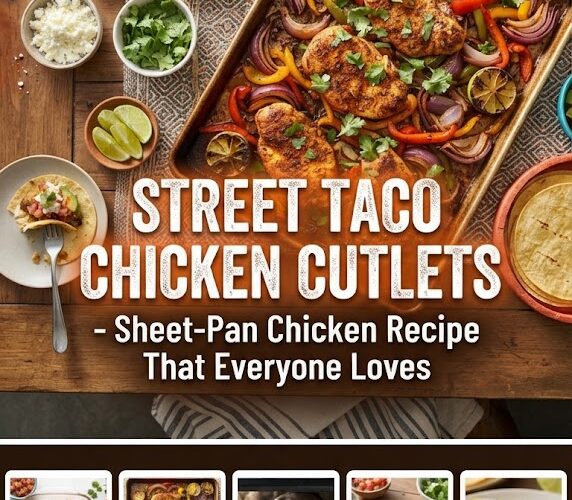
In the fast-paced world of modern cooking, the “sheet-pan dinner” has emerged as a reigning champion. It promises the holy trinity of home cooking: minimal prep, maximum flavor, and—perhaps most importantly—hardly any cleanup. Among the vast sea of sheet-pan recipes, one particular dish has captured the hearts and palates of families across the country: Street Taco Chicken Cutlets.
This isn’t just another chicken recipe. It is a fusion of the vibrant, smoky, and citrusy flavors found at a traditional Mexican street taco stall, reimagined for the efficiency of a contemporary American kitchen. By using thin-sliced chicken cutlets instead of bulky breasts, we unlock a cooking speed that makes this meal a viable option even on the most chaotic Tuesdays.
In this comprehensive guide, we will dive deep into why this recipe works, the science behind the perfect marinade, how to achieve that coveted “street-style” char in a standard oven, and how to build a taco bar that will make your home the most popular spot on the block.
Why Chicken Cutlets are the Secret to Sheet-Pan Success
Most recipes call for whole chicken breasts or thighs. While delicious, these cuts often lead to uneven cooking on a sheet pan—the tips dry out while the centers remain undercooked. This is where the chicken cutlet shines.
1. Rapid Cooking Time
Because cutlets are thin (usually about 1/4 to 1/2 inch thick), they cook in a fraction of the time. In a high-heat oven, you’re looking at a 12-to-15-minute cook time. This ensures the meat stays juicy while the exterior develops a beautiful crust.
2. Maximum Surface Area for Flavor
In the world of tacos, the marinade is king. A cutlet offers more surface area relative to its volume than a whole breast. This means every single bite is packed with the lime, cumin, and chili infusion we’re looking for. There is no “boring center” in a chicken cutlet.
3. Ease of Serving
Once cooked, cutlets can be sliced into thin strips effortlessly. They don’t require the heavy-duty shredding that thicker cuts do, making the transition from oven to tortilla seamless.
The Anatomy of the Perfect Street Taco Marinade
The soul of a street taco lies in its marinade. To replicate the complex flavor of a taco truck in California or a street vendor in Mexico City, you need a balance of acidity, fat, spice, and earthiness.
The Acid: Fresh Lime Juice
Lime juice does two things: it provides that signature bright tang, and the citric acid works to tenderize the muscle fibers of the chicken. Always use fresh limes; the bottled stuff lacks the essential oils found in the zest.
The Fat: Neutral Oil
A high-smoke-point oil like avocado oil or grapeseed oil is ideal. It carries the fat-soluble flavors of the spices into the meat and prevents the chicken from sticking to the pan.
The Earthiness: Cumin and Smoked Paprika
Cumin provides that unmistakable “taco” aroma—warm and nutty. Smoked paprika (Pimentón) is our secret weapon for “cheating” a smoky flavor without using an actual charcoal grill.
The Heat: Chili Powder and Cayenne
A standard chili powder blend provides a base of mild heat and color. If you prefer a kick, a pinch of cayenne or crushed red pepper flakes will elevate the profile.
The Aromatics: Garlic and Onion Powder
While fresh garlic is great, in a high-heat sheet-pan environment, fresh minced garlic can sometimes burn and become bitter. Using a high-quality garlic powder and onion powder ensures a consistent, savory flavor that coats the chicken evenly.
Step-by-Step Instructions: Mastering the Sheet-Pan Method
Ingredients You’ll Need
- Chicken: 1.5 lbs chicken cutlets (thin-sliced).
- Vegetables: 2 bell peppers (any color) and 1 large red onion.
- The Rub: 2 tsp chili powder, 1 tsp cumin, 1 tsp smoked paprika, 1 tsp garlic powder, 1 tsp salt, ½ tsp black pepper.
- The Liquid: 3 tbsp oil, juice of 2 limes.
- The Base: Corn or flour tortillas (street taco size).
1. Preparation and Preheating
Preheat your oven to 425°F (220°C). A hot oven is non-negotiable. We want to roast the meat and vegetables, not steam them. Line a large, heavy-duty rimmed baking sheet with parchment paper or aluminum foil for easy cleanup.
2. Slicing the Vegetables
Slice your peppers and onions into thin, uniform strips. The goal is for the vegetables to soften and slightly char in the same amount of time it takes the chicken to cook.
3. The Toss
In a large bowl, whisk together the oil, lime juice, and spices. Add the chicken cutlets and the sliced vegetables. Use your hands or tongs to ensure everything is thoroughly coated. This isn’t just about mixing; it’s about massaging the spices into the proteins.
4. Arranging the Pan
Spread the chicken and vegetables in a single layer on the sheet pan. Do not overcrowd the pan. If the ingredients are piled on top of each other, they will release moisture and steam, resulting in “soggy” tacos. If necessary, use two pans.
5. The Roast
Place the pan on the center rack. Roast for 12–15 minutes. At the 10-minute mark, check the chicken with a meat thermometer; you’re looking for an internal temperature of 165°F.
6. The Broil (The “Street Style” Finish)
For the final 2 minutes, switch your oven to Broil. This mimics the high-intensity heat of a flat-top grill, giving the edges of the onions a sweet char and the chicken a golden-brown finish. Watch it closely—seconds can be the difference between “perfectly charred” and “burnt.”
Building the Ultimate Street Taco: Toppings and Sides
The chicken is the star, but the toppings are the supporting cast that completes the performance. To achieve a true street taco experience, focus on textures: crunchy, creamy, and fresh.
The Essentials
- Cilantro and Onion: The classic duo. Finely diced white onion and chopped fresh cilantro provide a sharp, clean contrast to the savory chicken.
- Cotija Cheese: A dry, crumbly Mexican cheese that is salty and doesn’t melt. It adds a wonderful texture.
- Radishes: Thinly sliced radishes provide a refreshing crunch and a peppery bite.
- Fresh Lime Wedges: A final squeeze of lime right before eating wakes up all the other flavors.
The Creamy Elements
- Avocado or Guacamole: Whether you prefer slices of ripe avocado or a chunky guacamole, the healthy fats balance the acidity of the lime.
- Mexican Crema: Thinner and slightly sweeter than American sour cream, it drizzles perfectly over the cutlets.
The Salsas
- Pico de Gallo: For a fresh, tomato-forward bite.
- Salsa Verde: Made with roasted tomatillos and jalapeños, it adds a zesty, tangy layer.
- Chipotle Aioli: If you want a modern twist, mix mayo with chipotle peppers in adobo sauce.
Tortilla Tips: Don’t Settle for Cold Bread
A common mistake is serving these delicious chicken cutlets on cold, straight-from-the-bag tortillas. To truly elevate the meal:
- Char them on the stove: If you have a gas stove, place the tortillas directly over a low flame for 10 seconds per side until they show slight char marks.
- The Sheet-Pan Hack: In the last 2 minutes of cooking, wrap a stack of tortillas in foil and place them in the oven to warm through.
- Corn vs. Flour: Traditional street tacos almost always use corn tortillas (often doubled up to prevent tearing). However, flour tortillas are excellent for those who prefer a softer, heartier bite.
Nutritional Benefits: A Healthy Powerhouse
The Street Taco Chicken Cutlet recipe isn’t just delicious; it’s remarkably healthy. It fits into many modern dietary patterns:
- High Protein: Chicken cutlets are a lean source of protein, essential for muscle repair and satiety.
- Low Carb Friendly: Simply skip the tortillas and serve the chicken and peppers over a bed of cauliflower rice or shredded romaine lettuce for a “Taco Bowl” experience.
- Rich in Micronutrients: Bell peppers are loaded with Vitamin C (more than oranges!), while onions provide prebiotic fibers and antioxidants.
- Gluten-Free: As long as you use 100% corn tortillas and check your spice blends, this meal is naturally gluten-free.
Meal Prep and Storage
This recipe is a meal-prepper’s dream. Because the chicken cutlets are thin and well-seasoned, they hold up incredibly well in the fridge.
- In the Fridge: Store leftovers in an airtight container for up to 4 days.
- Reheating: Avoid the microwave if possible, as it can make chicken rubbery. Instead, flash-sear the strips in a hot skillet for 2 minutes to bring back the texture.
- The Lunch Transformation: Cold leftover street taco chicken is fantastic on top of a kale salad or tucked into a wrap for a quick office lunch.
Advanced Variations to Try
Once you’ve mastered the basic recipe, try these variations to keep things interesting:
1. The Tropical Twist
Add sliced pineapple to the sheet pan. The sugars in the pineapple caramelize under the broiler, creating a flavor profile reminiscent of Al Pastor tacos.
2. The Fajita Hybrid
Add sliced poblano peppers and a sprinkle of dried oregano. Serve with sautéed mushrooms for an earthy, deep flavor.
3. The Spicy Habanero Infusion
For the brave, mince half a habanero into the marinade. The heat is intense but carries a floral note that pairs beautifully with the lime.
Troubleshooting Common Issues
“My chicken is dry.”
Solution: You likely overcooked it or used cutlets that were too thin. Aim for 165°F and remember that the meat will continue to cook slightly after being removed from the oven (carryover cooking).
“My vegetables are mushy.”
Solution: Your oven temperature might be too low. Make sure it’s at least 425°F. Also, ensure you aren’t crowding the pan; vegetables need space for the moisture to evaporate.
“The flavor is bland.”
Solution: Don’t be afraid of salt! Salt is the catalyst that makes all the other spices pop. Additionally, make sure your spices haven’t been sitting in the pantry for three years—spices lose their potency over time.
The Cultural Significance of the Street Taco
While this sheet-pan version is a modern convenience, it’s important to respect the heritage of the street taco (taco de calle). In Mexico, tacos are more than just food; they are a social fabric. They represent a fast, accessible, and incredibly diverse culinary tradition.
Traditional street tacos often feature meats like Carne Asada, Al Pastor, or Barbacoa. By using chicken cutlets and the sheet-pan method, we are using the “flavor vocabulary” of the street taco—lime, chili, cilantro, and onion—to create something that fits into a busy, globalized lifestyle. It’s an homage to the efficiency and bold flavors of Mexican street food culture.
Kitchen Tools That Make a Difference
To get the best results for your Street Taco Chicken Cutlets, having the right gear helps:
- Heavy-Duty Sheet Pan: Look for “Half-Sheet” pans made of rimmed aluminum. They distribute heat more evenly than thin, dark “cookie sheets.”
- A Sharp Chef’s Knife: Since you’ll be slicing peppers, onions, and chicken, a sharp blade ensures clean cuts and safety.
- Instant-Read Thermometer: This is the only way to guarantee perfectly juicy chicken every single time.
- Microplane: Perfect for zesting the limes before you juice them to get that extra punch of citrus oil.
Conclusion: Why Everyone Loves This Recipe
The “Street Taco Chicken Cutlets” recipe resonates because it removes the barriers to a “fun” dinner. It’s not a project; it’s a process. It takes the stress out of cooking by utilizing a single pan and a single cooking method.
When you pull that tray out of the oven, and the aroma of toasted cumin and charred onions fills the kitchen, you’ll understand why it’s a crowd-pleaser. It’s colorful, it’s customizable, and it brings a bit of the vibrant street-side energy into the comfort of your home. Whether you’re feeding a family of four, hosting a casual gathering, or prepping for a week of healthy eating, these chicken cutlets are a versatile tool in your culinary arsenal.
So, grab your sheet pan, slice those limes, and get ready to enjoy a meal that proves “easy” can also mean “extraordinary.” Happy cooking!