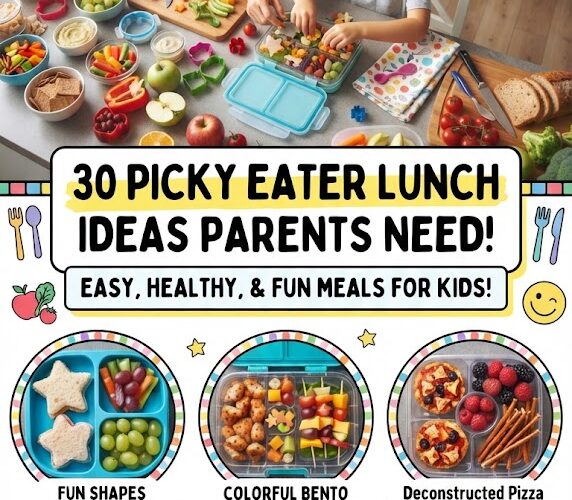
Finding lunch ideas for a picky eater can feel like solving the same puzzle every single morning. You pack something you think your child will love, only to find the lunchbox coming home untouched. The good news is that picky eating is common during childhood, and lunch does not have to become a daily battle. With familiar flavors, simple ingredients, fun presentation, and a little flexibility, you can create lunches that children are more willing to eat while still offering plenty of opportunities to explore nutritious foods.
This collection of 30 picky eater lunch ideas is designed for busy American families who need practical, kid-friendly meals for school days, daycare, summer lunches, and quick meals at home. These ideas focus on foods many selective eaters already enjoy—such as sandwiches, pasta, cheese, chicken, fruit, yogurt, tortillas, eggs, and familiar snacks—while giving parents easy ways to add variety.
The American Academy of Pediatrics recommends offering children nutritious choices while allowing them to decide what and how much they eat. It also emphasizes repeatedly offering foods without turning mealtimes into a struggle. USDA MyPlate similarly recommends variety across fruits, vegetables, grains, protein foods, and dairy or fortified soy alternatives.
Why Picky Eater Lunches Can Be So Challenging
Picky eating can be frustrating because children’s preferences can change quickly. A food they loved last week may suddenly become “yucky,” while another food may become their favorite for several days.
Instead of trying to make every lunch perfect, focus on creating a relaxed routine where familiar foods are consistently available alongside small opportunities to try something different.
One useful strategy is to include at least one familiar food your child already likes. The American Academy of Pediatrics recommends this approach rather than creating an entirely separate meal whenever a child refuses something.
Another important strategy is patience. Children may need repeated exposure before accepting a new food. USDA guidance notes that a child may need multiple tries before accepting something unfamiliar.
That means today’s untouched cucumber slice does not necessarily mean your child will never eat cucumber.
30 Picky Eater Lunch Ideas
1. Classic Turkey and Cheese Roll-Ups
Turkey and cheese roll-ups are one of the easiest picky eater lunch ideas because they are simple, familiar, and easy for little hands to eat.
Place sliced turkey and mild cheese on a tortilla. Roll it tightly and cut it into small pinwheels. Serve with strawberries, banana slices, or applesauce.
For children who dislike tortillas, simply roll the turkey and cheese together without the tortilla.
Lunchbox idea:
- Turkey and cheese roll-ups
- Strawberries
- Whole-grain crackers
- Yogurt
- Water
You can gradually introduce different cheeses or vegetables once your child becomes comfortable with the basic version.
2. Peanut Butter and Banana Sandwich
A peanut butter and banana sandwich is an easy option for children who enjoy sweet and familiar flavors.
Spread peanut butter on whole-grain bread and add thin banana slices. For extra texture, you can cut the sandwich into stars, hearts, or small squares.
If your child’s school is nut-free, replace peanut butter with an appropriate school-safe spread such as sunflower seed butter.
Add a small serving of berries or applesauce on the side.
3. Mini Cheese Quesadillas
Cheese quesadillas are an excellent lunch for children who prefer foods with predictable textures.
Place shredded mild cheese between two small tortillas and cook until the cheese melts. Allow the quesadilla to cool before cutting it into triangles.
Serve with:
- Corn
- Sliced strawberries
- Avocado
- Applesauce
- Yogurt
For an adventurous eater, add a tiny amount of shredded chicken or beans. For a very selective eater, start with plain cheese.
4. Chicken Nugget Lunchbox
Chicken nuggets may be a favorite food for many picky eaters, so you can build a balanced lunch around them instead of eliminating them completely.
Choose baked chicken nuggets when practical and pair them with familiar sides.
Try:
- Chicken nuggets
- Apple slices
- Cucumber rounds
- Whole-grain crackers
- Yogurt dip
If your child refuses vegetables, do not turn lunch into a negotiation. Continue offering small portions alongside foods they already enjoy.
The AAP notes that there are many protein options beyond chicken nuggets, including beans, lentils, tofu, nut butter, hummus, and whole-wheat pasta.
5. Buttered Pasta With Parmesan
Sometimes the simplest lunch wins.
Cook whole-wheat or regular pasta and toss it with a small amount of butter and grated Parmesan cheese.
Keep the sauce separate if your child dislikes mixed textures.
Add:
- Apple slices
- Peas
- Cheese cubes
- Yogurt
Once plain pasta is accepted, you can slowly experiment with small amounts of marinara, pesto, shredded chicken, or finely chopped vegetables.
6. DIY Lunchable-Style Box
Kids often enjoy lunches that allow them to assemble their own combinations.
Create a homemade lunch tray with small portions of:
- Crackers
- Cheese
- Turkey
- Apple slices
- Strawberries
- Cucumber
- Yogurt dip
Instead of telling your child exactly what to eat, allow them to choose what they want from the foods provided.
This approach also makes lunch more interactive.
7. Mini Pizza Bagels
Mini pizza bagels turn familiar pizza flavors into an easy school lunch.
Spread pizza sauce over mini bagel halves, add shredded mozzarella, and bake until the cheese melts.
Keep toppings simple for selective eaters.
You can offer pepperoni on the side instead of putting it directly on the pizza. This allows your child to control how adventurous the lunch becomes.
Serve with grapes cut appropriately for your child’s developmental stage, berries, or melon.
8. Chicken and Cheese Sandwich
A chicken and cheese sandwich is a simple alternative to traditional deli-meat sandwiches.
Use cooked chicken, mild cheese, and bread your child already likes.
You can serve the ingredients separately if your child dislikes sandwiches.
For example:
Deconstructed chicken sandwich:
- Chicken pieces
- Cheese slices
- Bread strips
- Apple slices
- Yogurt
This is particularly useful for children who reject foods when ingredients touch.
9. Mac and Cheese Lunchbox
Mac and cheese can be transformed into a filling lunchbox meal.
Prepare homemade or store-bought macaroni and cheese, then allow it to cool enough for packing according to your food-safety routine.
Pair it with:
- Strawberries
- Peas
- Cucumber
- Applesauce
- Milk or water
If your child accepts only plain mac and cheese, keep the main dish familiar while offering a tiny amount of a new food separately.
10. Pancake and Fruit Lunch
Who says pancakes are only for breakfast?
Make mini pancakes and pack them with fruit for a fun lunch.
Try:
- Mini pancakes
- Banana slices
- Strawberries
- Yogurt
- Turkey sausage
You can also spread a thin layer of sunflower seed butter or another appropriate spread between two pancakes to create mini pancake sandwiches.
11. Ham and Cheese Pinwheels
Ham and cheese pinwheels are quick, portable, and easy to customize.
Place ham and cheese on a tortilla, roll tightly, and cut into bite-sized pieces.
Add a familiar fruit and a crunchy side.
For example:
- Ham and cheese pinwheels
- Blueberries
- Pretzels
- Yogurt
If your child dislikes ham, use turkey or chicken instead.
12. Egg and Toast Dippers
Eggs can provide a convenient protein option for children who tolerate their taste and texture.
Make scrambled eggs or a simple hard-boiled egg, depending on your child’s preference.
Serve with toast strips for dipping.
Add fruit such as:
- Banana
- Strawberries
- Melon
- Blueberries
If your child dislikes eggs today, don’t force the issue. Offer another familiar protein and try eggs again another time.
13. Grilled Cheese and Tomato Soup
Grilled cheese is a classic kid-friendly lunch.
Prepare a simple grilled cheese sandwich and cut it into strips or small triangles.
If your child likes dipping foods, offer a small serving of tomato soup for dipping.
You can also add:
- Apple slices
- Crackers
- Yogurt
- Strawberries
For a picky eater who does not like tomato soup, serve the grilled cheese without it and offer another familiar side.
14. Peanut Butter Apple Sandwiches
For children who enjoy peanut butter and fruit, apple sandwiches can make lunch more exciting.
Slice an apple into thin pieces and use two slices as the “bread.” Add a thin layer of peanut butter between them.
You can also serve the ingredients separately if your child dislikes mixed textures.
Pair with crackers, cheese, or yogurt for a more substantial lunch.
Always consider your child’s age, chewing ability, allergies, and school allergy policies when packing foods.
15. Simple Chicken Pasta
Combine familiar pasta with small pieces of cooked chicken.
Start with a simple preparation such as:
Pasta + chicken + a little butter + Parmesan
This keeps the flavors predictable.
Once your child accepts the combination, you can experiment with a small amount of olive oil, mild sauce, peas, or finely chopped vegetables.
The goal is gradual variety rather than changing everything at once.
16. Fruit and Yogurt Parfait
A yogurt parfait can feel like a treat while still being an easy lunch component.
Layer plain or lightly sweetened yogurt with:
- Strawberries
- Blueberries
- Banana
- Whole-grain cereal
- Oats
Keep crunchy toppings separate if your child dislikes soggy textures.
This lunch works especially well when children enjoy assembling their own food.
17. Mini Turkey Sliders
Small sandwiches are often less intimidating than a large sandwich.
Use mini whole-grain rolls with turkey and mild cheese.
Serve the ingredients separately if necessary.
A simple lunchbox could contain:
- Turkey slider
- Cheese
- Strawberries
- Crackers
- Applesauce
You can introduce lettuce or cucumber later without changing the main sandwich.
18. Homemade Chicken Tenders
Instead of relying on frozen nuggets every day, make simple homemade chicken tenders.
Coat strips of chicken with breadcrumbs and bake until thoroughly cooked.
Serve with a familiar dipping sauce such as yogurt-based ranch or another sauce your child enjoys.
Add fruit and a grain-based side.
Dips can be useful because they give children another way to interact with unfamiliar foods. The AAP specifically notes that children may enjoy vegetables paired with dips or sauces.
19. Cheese and Cracker Lunch
When you need something extremely simple, create a balanced snack-style lunch.
Include:
- Whole-grain crackers
- Cheese
- Turkey
- Strawberries
- Apple slices
- Yogurt
This type of lunch can be especially useful for children who dislike traditional sandwiches.
Small portions also make unfamiliar foods feel less overwhelming.
20. Pasta Salad for Kids
Traditional pasta salad may be too complicated for a picky eater, so simplify it.
Use:
- Pasta
- Mild cheese
- Chicken
- Cucumber
- A small amount of dressing
Keep vegetables separate if your child dislikes them mixed into the pasta.
You can even serve each ingredient in its own lunchbox compartment.
21. Banana and Oat Mini Muffins
Homemade banana-oat muffins can be a convenient lunchbox carbohydrate.
Pair two small muffins with:
- Yogurt
- Cheese
- Strawberries
- Hard-boiled egg or another accepted protein
This helps create a lunch that includes several different food groups.
USDA MyPlate encourages offering a variety of fruits, vegetables, grains, protein foods, and dairy or fortified soy alternatives throughout the day.
22. Turkey and Avocado Toast
If your child likes avocado, spread a small amount over toast and top with turkey.
If avocado is unfamiliar, serve it separately rather than mixing it into the sandwich.
You can also replace avocado with cheese or another accepted ingredient.
Serve with berries or apple slices.
23. Mini Breakfast Burrito
A breakfast burrito can easily become a lunchbox favorite.
Fill a small tortilla with:
- Scrambled egg
- Cheese
- Potato
Keep salsa separate for children who dislike spicy or strong flavors.
For younger children, make sure ingredients are prepared in an age-appropriate size and texture.
24. Peanut Butter Oatmeal Cups
Bake simple oatmeal cups using oats, banana, and a child-appropriate nut or seed butter.
Serve with yogurt and fruit.
For a school-safe version, use a nut-free alternative when required.
These can also be prepared ahead of time, making busy school mornings easier.
25. Turkey, Cheese, and Fruit Skewers
Food on a stick can make familiar ingredients more exciting.
Thread appropriate pieces of turkey, cheese, and fruit onto child-safe food picks or serve them separated in a lunchbox.
For younger children, remove skewers and serve bite-sized pieces appropriate for their developmental stage.
The AAP recommends paying attention to choking hazards and preparing foods in safe sizes and textures for young children.
26. Baked Sweet Potato Fries and Chicken
If your child likes fries, baked sweet potato fries may be a useful way to introduce a different food.
Serve with familiar chicken pieces and a preferred dipping sauce.
Don’t expect your child to eat the sweet potato immediately. A small serving alongside familiar food is enough.
Repeated, low-pressure exposure can help children become more comfortable with foods over time.
27. Simple Rice and Chicken Bowl
Rice bowls are easy to customize.
Start with:
- White or brown rice
- Cooked chicken
- Mild cheese or avocado
- Fruit on the side
Serve vegetables separately.
Once your child becomes comfortable with the bowl, introduce tiny portions of corn, peas, carrots, or cucumber.
28. Homemade Lunchbox Pizza
Use pita bread, English muffins, or mini naan as the pizza base.
Add pizza sauce and mozzarella cheese, then bake until the cheese melts.
Pack the pizza with:
- Strawberries
- Apple slices
- Yogurt
- Cucumber
This is another meal where children can participate in preparation.
USDA recommends involving children in food preparation and letting them help choose foods.
29. Chicken and Cheese Pasta Cups
Cook pasta and mix it with small pieces of chicken and mild cheese.
Place the mixture into reusable silicone muffin cups or a divided lunch container.
The small portions can make the meal feel more approachable.
Add a favorite fruit and one small new food.
30. Build-Your-Own Lunch Box
When you’re completely out of ideas, let your child build lunch.
Offer three or four familiar choices plus one optional new food.
For example:
Protein: Turkey, chicken, egg, cheese
Grain: Crackers, tortilla, bread, pasta
Fruit: Strawberries, banana, apple, blueberries
Vegetable: Cucumber, corn, peas, carrots
Extra: Yogurt or hummus
Let your child choose a few items.
This approach gives children some control while keeping the choices nutritious and structured.
How to Make Picky Eater Lunches More Appealing
The best picky eater lunch ideas are not necessarily complicated recipes. Often, presentation and familiarity matter more.
Keep Portions Small
A large serving of unfamiliar food can feel overwhelming.
Start with a tiny amount of a new food. USDA specifically recommends small portions when introducing foods to children.
For example, instead of packing an entire handful of broccoli, try one or two small pieces alongside a familiar sandwich.
Keep Foods Separate
Some picky eaters strongly dislike foods touching each other.
A divided lunchbox can solve this problem.
Place:
- Chicken in one compartment
- Crackers in another
- Fruit in another
- Cheese in another
This allows your child to eat each food independently.
Use Familiar Foods as Bridges
Food bridges are a useful way to move from foods your child already accepts toward similar foods.
If your child likes:
French fries → roasted potatoes → sweet potato fries
Or:
Plain pasta → buttered pasta → Parmesan pasta → mild tomato sauce
Or:
Cheese quesadilla → chicken quesadilla → bean quesadilla
The goal is gradual change.
Make Food Fun
USDA recommends making food fun by using creative shapes, involving children in preparation, and allowing them to participate in food choices.
Try:
- Cookie-cutter sandwiches
- Fruit shapes
- Mini pancakes
- Colorful lunchbox compartments
- DIY wraps
- Food faces
- Dipping sauces
You don’t need to make every lunch look like a Pinterest masterpiece. Even cutting a sandwich into triangles instead of squares can make it feel different.
How to Introduce New Foods Without a Lunchbox Battle
One of the biggest mistakes parents can make is turning every new food into a test.
Instead of saying, “You have to eat your carrots,” try simply placing one small carrot piece in the lunchbox.
If your child doesn’t eat it, that’s okay.
Offer it again another time.
The AAP explains that repeated exposure can help children become more comfortable with foods, and some children may need many opportunities before accepting a new food.
A helpful pattern is:
Familiar food + familiar food + tiny new food
For example:
Turkey sandwich + strawberries + one cucumber slice
This feels much less intimidating than:
Chicken + broccoli + carrots + spinach + quinoa
all at once.
Easy Picky Eater Lunchbox Formula
If you don’t want to follow recipes every day, use this simple formula:
1. Choose one protein
Examples:
- Chicken
- Turkey
- Egg
- Cheese
- Yogurt
- Beans
- Hummus
- Nut or seed butter
2. Choose one grain or carbohydrate
Examples:
- Bread
- Tortilla
- Pasta
- Rice
- Crackers
- Oatmeal
- Mini pancakes
3. Add one fruit
Examples:
- Strawberries
- Blueberries
- Banana
- Apple
- Melon
- Orange segments
4. Add one vegetable
Examples:
- Cucumber
- Corn
- Peas
- Carrots
- Avocado
- Sweet potato
5. Add one familiar favorite
This could be:
- Yogurt
- Applesauce
- Pretzels
- Cheese
- Crackers
This formula gives you dozens of possible combinations without needing a completely new recipe every morning.
7 Picky Eater Lunchbox Combinations for Busy School Days
Monday
Turkey and cheese roll-ups + strawberries + crackers + yogurt.
Tuesday
Mini cheese quesadillas + banana + cucumber + applesauce.
Wednesday
Buttered pasta + chicken + blueberries + cheese.
Thursday
Mini turkey slider + apple slices + pretzels + yogurt.
Friday
Chicken nuggets + strawberries + crackers + cucumber.
The following week, swap just one component.
Small changes can create variety without completely disrupting the foods your child already accepts.
Healthy Lunch Tips for Parents
A healthy lunch does not need to contain every possible nutrient in perfect proportions. What matters more is the overall eating pattern across the day.
USDA recommends offering children a variety of food groups, including fruits, vegetables, grains, protein foods, and dairy or fortified soy alternatives.
Here are practical ways to make lunch more nutritious:
Choose Whole Grains When Accepted
Try whole-grain bread, whole-wheat pasta, oatmeal, whole-grain crackers, or brown rice when your child accepts them.
If your child currently refuses whole grains, don’t make the switch overnight. Start with familiar foods and gradually introduce alternatives.
Include Fruit Regularly
Fruit can be an easier starting point for children who resist vegetables.
Try:
- Berries
- Apples
- Bananas
- Melon
- Peaches
- Pears
AAP guidance recommends incorporating fruits and vegetables into meals and snacks.
Don’t Forget Protein
Protein doesn’t have to mean meat.
Children can get protein from foods such as eggs, yogurt, cheese, beans, lentils, tofu, hummus, nut or seed butters, chicken, and turkey.
Keep Water Available
Water is a simple beverage choice for lunch. Depending on age and dietary needs, milk or a fortified soy alternative may also fit into the overall eating pattern.
What If Your Child Eats Only a Few Foods?
If your child has an extremely limited diet, avoid assuming that every refusal is simply stubbornness.
Some children have strong sensory preferences involving texture, smell, temperature, appearance, or consistency.
The best approach is generally calm and gradual.
Continue offering appropriate nutritious foods and avoid pressure or punishment around eating. The AAP recommends allowing children to decide how much they eat from the nutritious foods parents provide.
If you’re concerned about your child’s growth, nutrition, or extremely restricted food choices, speak with your child’s pediatrician or a registered dietitian.
Picky Eater Lunch Mistakes to Avoid
Don’t Force a Clean Plate
Children don’t necessarily need to finish everything packed in their lunchbox.
Avoid making “clean your plate” the goal.
Don’t Make Every Lunch a New Recipe
Novelty can make picky eating more difficult.
Build around foods your child already recognizes.
Don’t Give Up After One Refusal
A child refusing broccoli once doesn’t mean broccoli is permanently off the menu.
Try again later in a small, low-pressure portion.
Don’t Hide Every Vegetable
While adding vegetables to familiar foods can be practical, children should also have opportunities to see, smell, touch, and taste foods in their recognizable form.
Don’t Make Mealtime a Competition
Lunch should be about eating and enjoying food—not winning a battle.
A calm environment can make the process much easier for everyone.
How Kids Can Help Prepare Their Lunches
Children are often more interested in food when they participate in preparing it.
Depending on age and ability, kids can:
- Wash fruit
- Stir yogurt
- Choose between two fruits
- Place crackers into a lunchbox
- Assemble a sandwich
- Roll tortillas
- Sprinkle cheese
- Choose lunchbox compartments
- Help create a weekly menu
USDA encourages involving children in food preparation and grocery shopping as ways to build healthy eating habits.
For younger children, always provide appropriate supervision and age-safe tasks.
Frequently Asked Questions About Picky Eater Lunch Ideas
What is a good lunch for a very picky eater?
A good starting point is a lunch made with foods your child already accepts. Try a turkey and cheese roll-up, plain pasta with chicken, cheese quesadilla, mini sandwich, yogurt and fruit, or crackers with cheese and turkey.
Add one small optional new food rather than changing the entire meal.
How can I make lunch healthier for a picky eater?
Start with foods your child accepts and gradually add variety. Include a protein, grain or carbohydrate, fruit, and a vegetable when possible. You do not need to force your child to eat every component.
What should I pack for a picky eater at school?
Easy choices include turkey roll-ups, cheese quesadillas, mini sandwiches, pasta, chicken pieces, yogurt, fruit, crackers, and homemade muffins. Always follow your school’s allergy and food-storage policies.
How do I get my picky eater to eat vegetables?
Offer small portions of vegetables alongside familiar foods without pressure. Try dips, fun shapes, roasted versions, or vegetables similar to foods your child already enjoys. Repeated exposure can help children become more comfortable with new foods.
How many times should I offer a food my child refuses?
There is no need to give up after one refusal. Children may need repeated exposure before accepting a food. Keep portions small and continue offering foods without forcing your child to eat them.
Are chicken nuggets okay for picky eaters?
Chicken nuggets can be included as part of a varied eating pattern. You can serve them with fruit, vegetables, whole grains, yogurt, or another nutritious side. Over time, you can also introduce other protein options.
What if my child refuses everything in the lunchbox?
Keep calm and look for patterns. Your child may prefer certain textures, temperatures, brands, shapes, or flavors. Talk with your pediatrician if you’re worried about growth, nutritional intake, or an unusually restricted diet.
Final Thoughts
Packing lunch for a picky eater does not have to mean preparing three completely different meals every morning. The most successful approach is often simple: start with familiar foods, introduce variety slowly, offer small portions, and keep mealtimes low-pressure.
These 30 picky eater lunch ideas give parents plenty of starting points, from turkey and cheese roll-ups and mini quesadillas to chicken pasta, yogurt parfaits, homemade pizza, and build-your-own lunchboxes.
Remember that children develop food preferences at different rates. A lunchbox that comes home half-full does not automatically mean you’ve failed. Keep offering nutritious choices, give your child reasonable control over what and how much they eat, and continue providing opportunities to explore new foods.
With patience and repetition, today’s picky eater may gradually become tomorrow’s more adventurous eater.